Serper vs ScraperAPI vs Talordata: Google SERP API Comparison
Compare Serper, ScraperAPI, and Talordata for Google SERP API workflows. Review search coverage, JSON output, pricing models, scraping infrastructure, AI use cases, and best-fit scenarios.
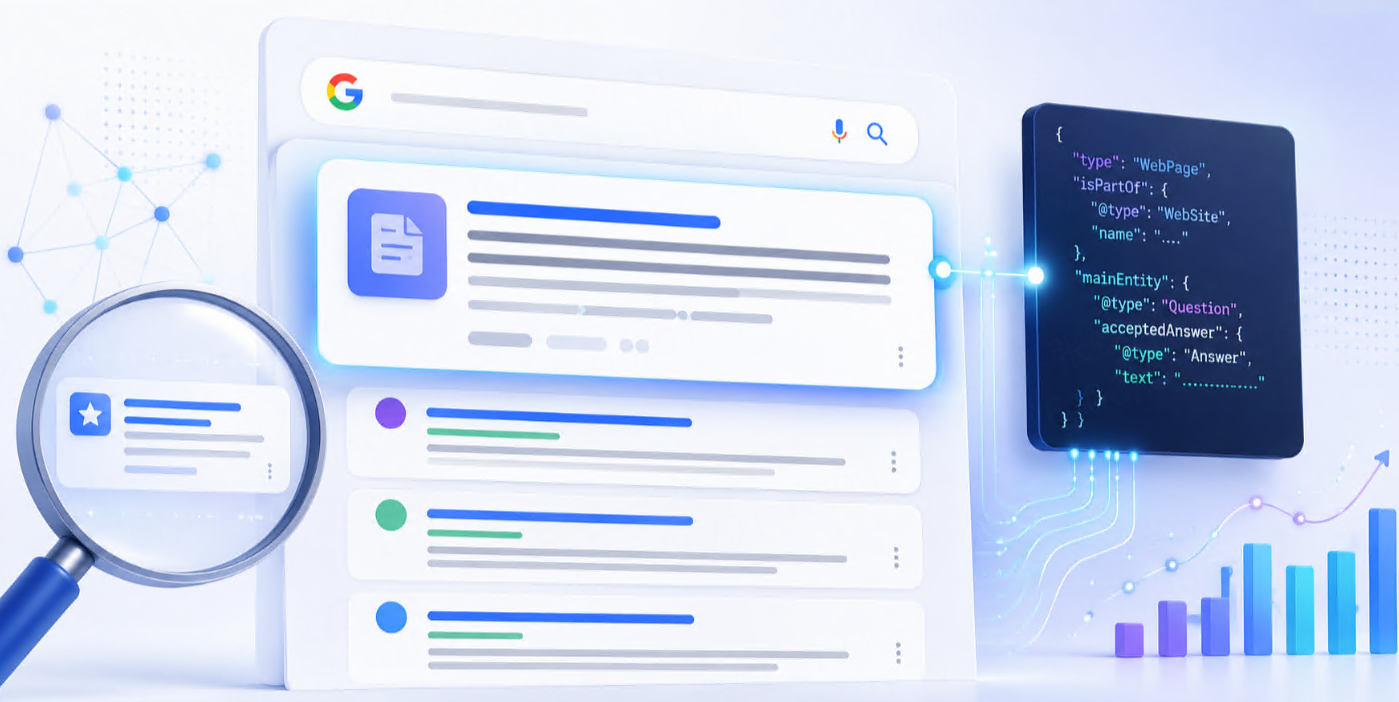



Serper, ScraperAPI, and Talordata can all help developers collect Google search results, but they are built around different product ideas.
Serper is a fast Google Search API for developers who want quick structured results. Its homepage highlights 1–2 second Google results, 2,500 free queries, and support for Google Search, Images, News, Maps, Places, Videos, Shopping, Scholar, Patents, and Autocomplete.
ScraperAPI is broader. It is mainly a web scraping API that helps teams collect data from public websites without handling proxies, browsers, or CAPTCHA challenges themselves. It also provides structured data endpoints, including Google Search, Google Shopping, Google Maps, Google News, and Google Jobs scrapers.
Talordata is more focused on SERP data workflows. Its SERP API pricing page lists real-time Google, Bing, Yandex, and DuckDuckGo search data, JSON / HTML responses, country / city / language / device targeting, automatic retries, IP rotation, and response-based packages.
The real question is not simply “which API is better?” It is:
Do you need a fast Google-only API, a broader web scraping infrastructure, or a focused SERP data layer for repeatable search monitoring?
Quick Comparison
|
Factor |
Serper |
ScraperAPI |
Talordata |
|
Main focus |
Fast Google Search API |
Web scraping API with structured Google endpoints |
SERP API for structured search data |
|
Best for |
AI prototypes, simple Google search features |
Teams that need scraping infrastructure and Google scrapers |
SEO monitoring, AI/RAG workflows, multi-engine SERP data |
|
Output |
Structured Google result JSON |
JSON / CSV / raw scraping workflows depending on endpoint |
JSON / HTML SERP responses |
|
Search coverage |
Google Search and Google verticals |
Google Search, Shopping, Maps, News, Jobs, plus broader web scraping |
Google, Bing, Yandex, DuckDuckGo |
|
Free testing |
2,500 free queries |
7-day free trial with 5,000 API credits |
|
|
Pricing style |
Credit top-up |
Monthly API credit plans |
Response packages |
|
Best fit |
Lightweight Google API |
Broader scraping stack |
Repeatable SERP data workflows |
When Serper Makes Sense
Serper is the easiest choice when your application mainly needs fast Google results.
For example, Serper works well for:
-
AI chatbot search grounding
-
simple “search and summarize” tools
-
RAG source discovery prototypes
-
small internal research tools
-
quick Google Search API experiments
Its pricing is also easy to understand. Serper’s homepage lists a Starter package at $50 for 50,000 credits, or $1.00 per 1,000 queries, with larger packages going down to $0.30 per 1,000 credits. It also says credits are valid for 6 months.
The tradeoff is scope. Serper is great when the workflow is Google-first and relatively simple. But if your team needs multi-engine monitoring, raw HTML output, or broader scraping infrastructure, you may need to compare other options.
Choose Serper if you want the fastest path from query to Google result JSON.
When ScraperAPI Makes Sense
ScraperAPI is a better fit when SERP data is only one part of a broader scraping workflow.
Its main product message is not limited to search results. ScraperAPI positions itself as a simple API for collecting public web data while handling proxies, browsers, and CAPTCHA challenges.
That matters when a workflow needs more than SERP rows. For example, a team may want to collect Google results, then scrape destination pages, competitor product pages, category pages, or other public pages with the same infrastructure.
ScraperAPI’s structured data endpoints are also relevant for Google workflows. Its structured endpoints page says teams can gather structured data in JSON format, avoid manual parsing, and use Google scrapers for Google Search, Shopping, Maps, News, and Jobs.
ScraperAPI’s SERP data collection page says it offers a 7-day free trial with 5,000 API credits and mentions a 100,000 API credit plan at $49 per month.
Choose ScraperAPI if your project needs Google SERP data, but also needs a broader web scraping layer around it.
When Talordata Makes Sense
Talordata is a stronger fit when search results are part of a repeatable data pipeline.
That includes:
-
SEO rank monitoring
-
competitor search visibility tracking
-
AI agent source discovery
-
RAG source refresh workflows
-
Google vs Bing comparison
-
multi-location SERP monitoring
-
exporting SERP rows to dashboards or Google Sheets
Talordata’s pricing page lists 1,000 free API responses, then public packages such as 5,000 responses at $1 per 1K, 30,000 responses at $0.90 per 1K, 100,000 responses at $0.70 per 1K, and larger packages with lower per-1K rates.
The key difference is workflow focus. Talordata is not trying to be a general-purpose web scraping platform. It is better positioned as a SERP data layer for teams that need structured search results across engines, locations, languages, and devices.
Choose Talordata if you need Google SERP data today, but also want Bing, Yandex, DuckDuckGo, JSON / HTML output, and recurring monitoring workflows. Start free testing>>
Pricing Comparison
Pricing changes over time, so always check the official pricing pages before purchase. The table below is only a practical starting point.
|
Provider |
Free Testing |
Public Entry Point |
Pricing Logic |
|
Serper |
2,500 free queries |
$50 for 50,000 credits |
Credit top-up |
|
ScraperAPI |
7-day trial with 5,000 API credits |
100,000 API credits at $49/month |
API credits / scraping plans |
|
Talordata |
1,000 free API responses |
5,000 responses for $5 / 30 days |
Response packages |
Do not compare only the lowest price per 1,000 requests. A better formula is:
real cost = total spend ÷ usable SERP results
A usable result should include the fields your workflow needs: query, location, device, position, title, URL, domain, snippet, timestamp, and result type.
Which One Should You Choose?
Use Serper if your team wants a fast Google Search API for an AI prototype, chatbot, or lightweight search feature.
Use ScraperAPI if your team needs Google SERP data plus broader web scraping infrastructure, structured endpoints, proxy handling, JavaScript rendering, and anti-bot handling.
Use Talordata if your workflow needs structured SERP data, multi-engine coverage, geo-targeted search, JSON / HTML output, and a pricing path that fits recurring monitoring or AI search workflows.
The best way to choose is to run the same real queries across all three APIs.
Test:
20 real queries
× 2 locations
× desktop and mobile
× top 10 results
Then compare:
-
field completeness
-
missing titles or URLs
-
snippet quality
-
localization accuracy
-
schema stability
-
retry behavior
-
cost per usable row
-
how easily the response fits your app
That test will tell you more than any feature list.
FAQ
What is the main difference between Serper, ScraperAPI, and Talordata?
Serper is a fast Google Search API. ScraperAPI is a broader web scraping API with structured Google scraping endpoints. Talordata is a SERP API focused on structured search data across Google, Bing, Yandex, and DuckDuckGo.
Which API is better for AI agents?
Serper is easy for quick AI search prototypes. Talordata is better when AI agents need recurring source discovery, multi-engine results, localization, and JSON / HTML output. ScraperAPI can fit when the agent also needs to scrape destination pages.
Which API is better for SEO monitoring?
Talordata is a strong fit for recurring SERP monitoring across keywords, locations, devices, and search engines. Serper can work for simple Google-only checks. ScraperAPI is useful when SEO monitoring is part of a broader scraping workflow.
Is ScraperAPI a SERP API?
ScraperAPI is broader than a SERP API. It is mainly a web scraping API, but it also provides Google-related structured data endpoints, including Google Search, Shopping, Maps, News, and Jobs.
How should developers compare SERP APIs?
Use real queries from your product. Compare response fields, localization, schema stability, missing data, retry behavior, and cost per usable result. The best API is the one that fits your actual workflow with the least cleanup.
Final Thoughts
Serper, ScraperAPI, and Talordata are all useful, but they solve different problems.
Serper is best when you need fast Google result JSON.
ScraperAPI is best when SERP collection is part of a larger web scraping system.
Talordata is best when you need structured SERP data, multi-engine coverage, geo-targeted search, JSON / HTML output, and repeatable monitoring workflows.
For developers, the right choice depends less on brand name and more on the shape of your data pipeline. Test the same queries, compare usable rows, and pick the API that creates the least friction after the response arrives.