How to Connect Live SERP Data to n8n AI Agents
Learn how to connect live SERP data to n8n AI Agents with an MCP server. Build search automation workflows for SEO research, competitor monitoring, RAG source discovery, and AI-generated reports.



n8n AI Agents are useful when you want to automate research, monitoring, reporting, and decision-making workflows.
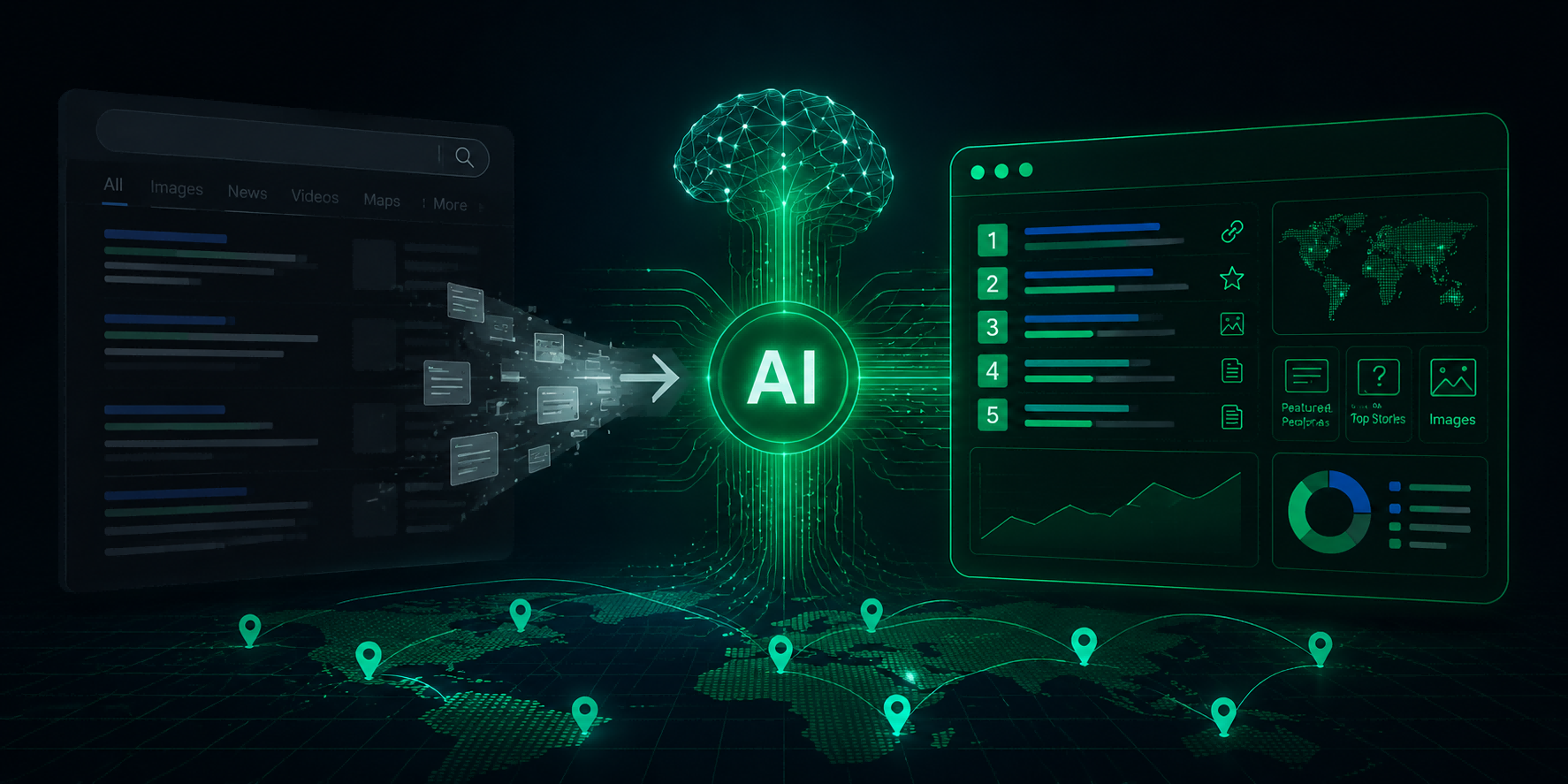
But an AI agent has one problem by default: it does not automatically know what is currently ranking in Google, Bing, Yandex, or DuckDuckGo.
If you ask an agent:
Find the current top Google results for “best SERP API for AI agents”
and summarize the main competitors.
it needs live search data.
That is where a SERP API and an MCP server fit in.
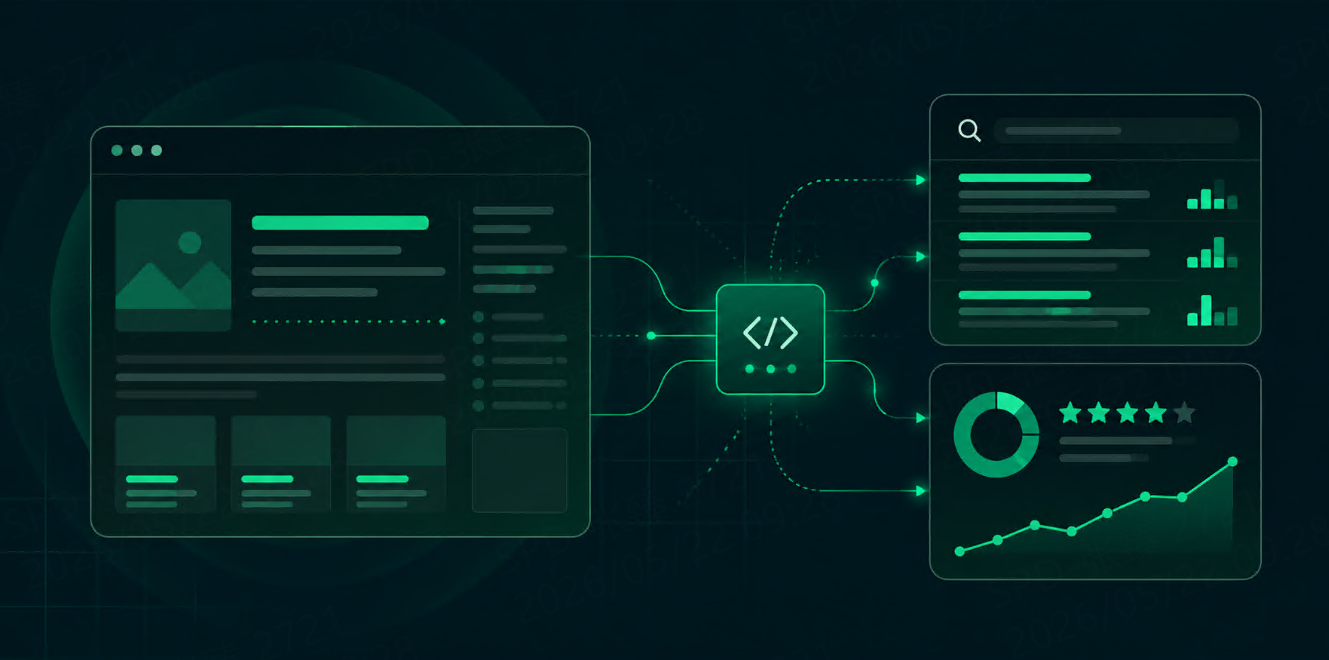
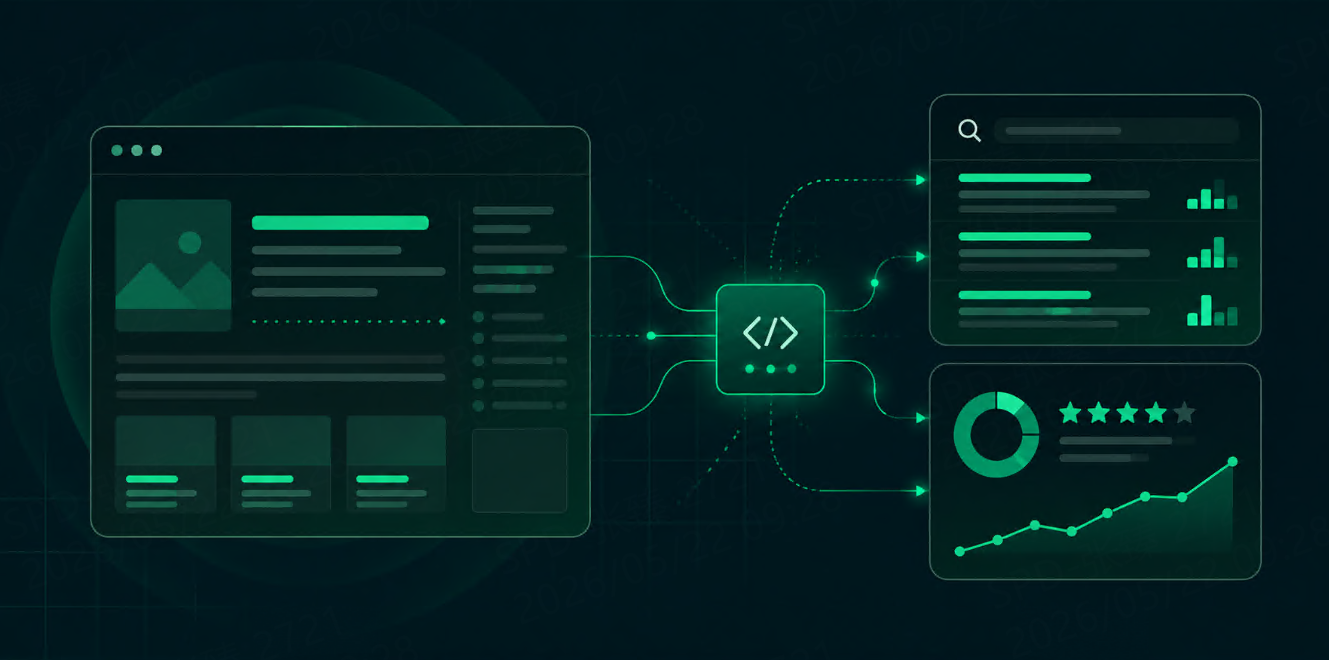
A SERP API collects structured search results. An MCP server exposes that search capability as a tool. In n8n, the AI Agent can use tools and APIs to retrieve information and decide which tool to use for a task. n8n’s AI Agent node also requires at least one connected tool sub-node.
The workflow looks like this:
n8n AI Agent
→ MCP Client Tool
→ Remote SERP MCP Server
→ SERP API
→ Live search results
→ AI summary / report / alert
This gives your n8n AI Agent a live search layer without forcing you to hardcode every search request as a fixed HTTP workflow.
Why Live SERP Data Matters in n8n
Many n8n workflows are triggered by events.
A workflow might start from:
-
a schedule trigger
-
a chat message
-
a webhook
-
a form submission
-
a new row in Google Sheets
-
a Slack command
-
a CRM update
But when the workflow needs current search visibility, static prompts are not enough.
Live SERP data helps an n8n AI Agent answer questions like:
-
Which domains rank for this keyword today?
-
Did a competitor enter the top 10?
-
What topics appear most often in Google results?
-
Which pages should we review before writing new content?
-
Which sources should a RAG workflow refresh?
-
How do Google and Bing results differ for the same query?
For SEO, content, growth, and AI workflows, search results are not just links. They are signals.
MCP Client Tool vs HTTP Request in n8n
You can call a SERP API directly with an HTTP Request node in n8n. That works well when your workflow is fixed.
For example:
Every Monday at 9:00
→ Search the same 50 keywords
→ Save results to Google Sheets
→ Send a report
MCP becomes more useful when the AI Agent should decide how to use search.
For example:
Research this topic.
Search Google and Bing if needed.
Find repeated domains.
Summarize common article angles.
Suggest what we should write differently.
That is more flexible than a fixed request chain.
|
Approach |
Best For |
|
HTTP Request node |
Fixed queries, scheduled jobs, dashboards |
|
MCP Client Tool |
Agent-driven research, flexible prompts, multi-step reasoning |
|
Both together |
Production workflows that need automation and AI flexibility |
n8n also has an MCP Server Trigger node, but that is a different direction: it lets n8n act as an MCP server and expose n8n tools or workflows to MCP clients. For this article, the focus is the opposite direction: an n8n AI Agent calling an external SERP MCP server through an MCP tool.
What We Will Build
We will design a practical n8n workflow:
Manual Trigger or Schedule Trigger
→ AI Agent
→ MCP Client Tool
→ SERP MCP Server
→ Search result data
→ AI summary
→ Slack / Google Sheets / Notion / Email
This pattern can support several workflows:
|
Workflow |
What the AI Agent Does |
|
SEO research |
Finds ranking pages and summarizes content angles |
|
Competitor monitoring |
Checks which domains appear in the top results |
|
RAG source discovery |
Finds fresh sources for a knowledge pipeline |
|
Content planning |
Groups search results by intent and topic |
|
Local SEO |
Reviews Maps or Local Pack visibility |
|
Reporting |
Turns SERP rows into a weekly summary |
Example Workflow 1: SERP Research Agent
Start with a manual trigger or chat input.
Input:
Keyword: SERP API for RAG
Location: United States
Search engine: Google
Result count: Top 10
Then give the AI Agent a specific instruction:
Use the SERP search tool to find the top 10 Google organic results
for the keyword below.

Return:
1. repeated domains
2. common page types
3. common title patterns
4. content gaps
5. suggested blog angle

Keyword: {{ $json.keyword }}
Location: {{ $json.location }}
The MCP tool returns structured SERP data.
A normalized response may look like this:
{
  "query": "SERP API for RAG",
  "engine": "google",
  "location": "United States",
  "results": [
    {
      "position": 1,
      "title": "Example Page Title",
      "url": "https://example.com/article",
      "domain": "example.com",
      "snippet": "Short search result summary..."
    }
  ]
}
The AI Agent can then summarize the results and send the output to Slack, Google Sheets, Notion, Gmail, Airtable, or another n8n workflow.
Example Workflow 2: Competitor Monitoring
For competitor monitoring, run the workflow on a schedule.
Schedule Trigger
→ Read keywords from Google Sheets
→ AI Agent calls SERP MCP tool
→ Extract top 10 domains
→ Compare with previous results
→ Summarize changes
→ Send alert
A useful alert might look like this:
Keyword: Google SERP API

Changes since last run:
- examplecompetitor.com entered position 4.
- olddomain.com dropped out of the top 10.
- Three results now mention “AI agents” in the title.
- Two new comparison pages appeared.

Suggested action:
Update our comparison content to include AI agent and RAG use cases.
This turns SERP changes into action items instead of raw ranking rows.
Example Workflow 3: RAG Source Refresh
SERP data also works well as a discovery layer for RAG workflows.
A scheduled n8n workflow can:
Search target topics
→ collect top URLs
→ filter trusted domains
→ fetch pages
→ extract readable text
→ update vector database
→ notify team
The SERP MCP server handles live search discovery. n8n handles orchestration. The AI Agent helps filter, summarize, or classify sources before they enter the knowledge pipeline.
This avoids relying only on stale documents or manually curated source lists.
What Data Should the AI Agent Receive?
Do not send raw HTML to the AI Agent unless the workflow truly needs it.
For most n8n AI workflows, start with compact SERP fields:
|
Field |
Purpose |
|
|
Keeps the result tied to the original search |
|
|
Helps compare Google, Bing, or other engines |
|
|
Important for localized results |
|
|
Shows ranking order |
|
|
Helps summarize page intent |
|
|
Gives the source |
|
|
Useful for grouping and deduplication |
|
|
Gives context without fetching the page |
|
|
Makes the result auditable |
If the AI Agent needs deeper analysis, add a second step that fetches the full page content.
Keep these two layers separate:
SERP data = discovery layer
Page content = evidence layer
AI Agent = reasoning and reporting layer
Recommended n8n Workflow Design
A clean workflow can look like this:
1. Trigger
   Manual Trigger / Schedule Trigger / Webhook / Chat input

2. Input preparation
   Normalize keyword, location, engine, and result count

3. AI Agent
   Receives task and decides how to use search

4. MCP Client Tool
   Calls the external SERP MCP server

5. Data cleanup
   Keep title, URL, domain, snippet, position, timestamp

6. Storage
   Save rows to Google Sheets, database, Airtable, or Notion

7. AI summary
   Generate findings, changes, risks, and suggested actions

8. Delivery
   Send to Slack, email, Notion, or dashboard
This makes the workflow easier to debug. If the summary looks wrong, you can inspect the stored SERP rows first.
Best Practices
Keep the agent prompt specific
Avoid vague prompts like:
Research this keyword.
Use structured prompts:
Search the keyword, return top 10 organic results, group by domain,
identify repeated content angles, and suggest one article gap.
Limit result count first
Top 10 results are enough for most monitoring and content research workflows.
Use top 20 or top 50 only when the workflow really needs more depth.
Store raw SERP rows before summarizing
AI summaries are useful, but structured rows are easier to audit.
Save:
query
engine
location
position
title
url
domain
snippet
collected_at
Separate search discovery from page scraping
SERP data tells you what is visible in search.
Full-page extraction tells you what the page actually says.
Do not mix both steps too early.
Use MCP for flexible agent workflows
Use MCP when the AI Agent needs to decide:
-
whether to search
-
which engine to use
-
which keyword variation to try
-
whether to compare multiple result sets
-
how to summarize the search results
Use direct HTTP Request nodes when the workflow is fixed and predictable.
Control tool access
MCP tools can give agents powerful capabilities. Keep tool names clear, restrict unnecessary tools, and avoid exposing credentials directly in prompts or shared workflow notes.
n8n’s MCP Server Trigger documentation also notes authentication options such as bearer auth and header auth when exposing MCP URLs, which is a useful reminder when designing MCP-based workflows.
Talordata fits as the SERP data layer behind the MCP workflow.
Instead of making the AI Agent understand every search parameter, endpoint, and response format, the MCP server can expose simple tools such as:
search_google
search_bing
search_duckduckgo
compare_google_bing
get_serp_history
The AI Agent calls the tool. The MCP server handles the SERP API request. The workflow receives structured search results. View the document
This is useful when you want n8n workflows to support:
-
SEO research
-
competitor monitoring
-
AI-generated SERP reports
-
RAG source discovery
-
multi-engine result comparison
-
recurring search visibility checks
FAQ
Can n8n AI Agents query live search results?
Yes. An n8n AI Agent can query live search results if it has access to a search tool. One way to provide that tool is through an MCP server connected to a SERP API.
Why use MCP instead of a normal HTTP Request node?
Use HTTP Request nodes for fixed workflows. Use MCP when you want an AI Agent to decide when to search, what to search, and how to use the results inside a broader reasoning task.
What can I build with n8n, MCP, and SERP data?
You can build SEO research agents, competitor monitoring workflows, RAG source refresh pipelines, content research assistants, local SEO reports, and weekly search visibility summaries.
Should I store SERP results in n8n?
Yes, especially for recurring workflows. Store structured fields such as query, engine, location, position, title, URL, domain, snippet, and timestamp before generating an AI summary.
Is this only for Google Search?
No. The same workflow pattern can support Google, Bing, Yandex, DuckDuckGo, Maps, Shopping, News, or other search result types, depending on what your SERP API and MCP server expose. Start Free Trial>>