Oxylabs vs TalorData SERP API: How Should You Choose?
Compare Oxylabs and TalorData SERP API for search results data, SEO rank tracking, AI agents, local SEO, market research, pricing, and developer workflows.
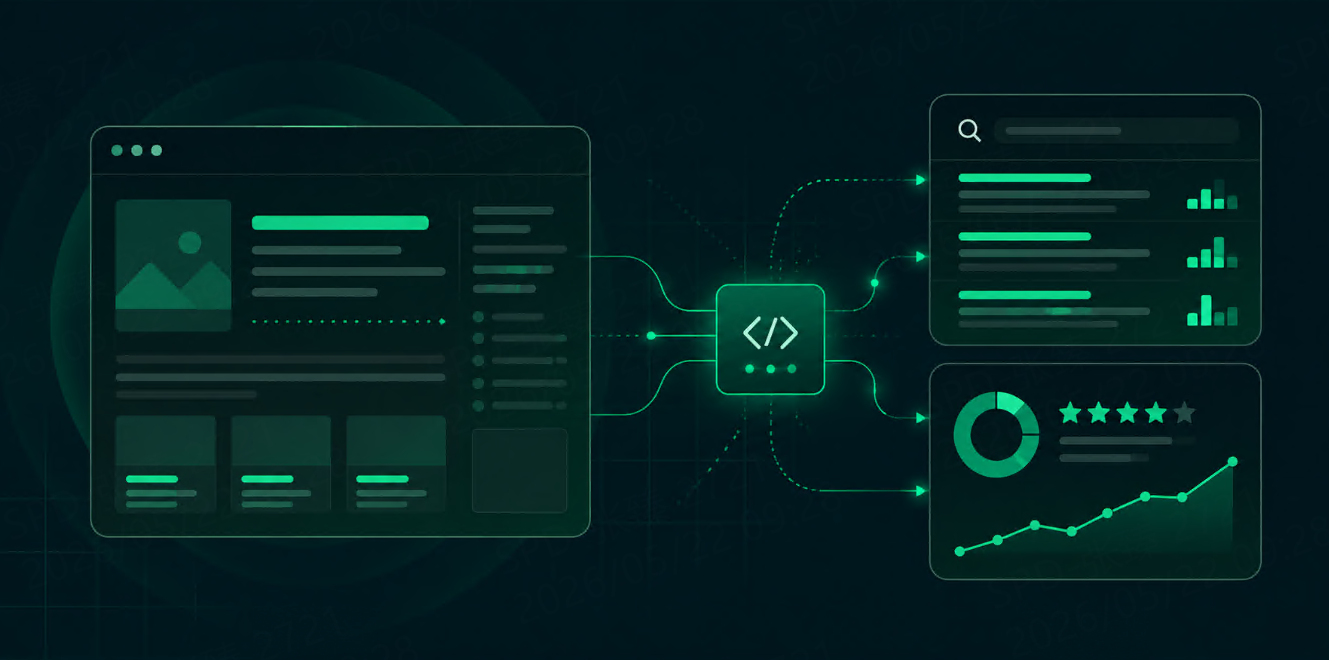



Oxylabs and TalorData can both help teams collect search results data. But they do not feel like the same kind of product.
Oxylabs comes from a broader web scraping and proxy infrastructure background. Its SERP Scraper API is part of its Web Scraper API, and the product page describes features such as pay-only-for-successfully-delivered-results, coordinate-level precision data, SERP feature scraping, and maintenance-free scraping infrastructure.
TalorData is more SERP-first. Its SERP API page focuses on structured search results from Google and major search engines, JSON / HTML output, geo-targeted SERP data, pay-per-successful-request billing, and use cases such as SEO rank monitoring, competitor monitoring, AI agent integration, local SEO, news monitoring, and e-commerce intelligence.
So the choice is not simply:
Which one is better?
The better question is:
Do you need a broader scraping infrastructure platform, or a focused SERP data API?
Quick comparison
|
Area |
Oxylabs |
TalorData |
|
Product type |
SERP scraping inside broader web scraping infrastructure |
SERP-first search data API |
|
Best fit |
Teams that need SERP data plus broader scraping, proxy, or browser-related workflows |
Teams focused on structured SERP data for SEO, AI agents, local SEO, and monitoring |
|
Output |
Parsed SERP data and scraping outputs |
JSON / HTML SERP responses |
|
Localization |
Supports geo-location, including coordinate and radius examples in docs |
Supports geo-targeted SERP data and targeting by country, city, language, and device |
|
Pricing style |
SERP product page says billing is based on successfully extracted results |
Pricing page lists 1,000 free API responses and packages from $1/1K down to $0.25/1K responses |
|
Workflow feel |
Infrastructure-heavy, useful for complex data collection |
API-first, useful for repeatable search data workflows |
What Oxylabs is good at
Oxylabs makes sense when SERP data is only one part of a wider scraping operation.
Its SERP Scraper API page positions the product around real-time extraction from search engines for SEO analysis, market research, competitor tracking, trend monitoring, rankings, and advertising strategy.
It also emphasizes not needing custom scrapers, parsers, or browsers, which is useful if your team wants to avoid maintaining a full scraping stack.
Oxylabs is especially relevant when your workflow looks like this:
Collect SERP data
→ collect pages behind those results
→ handle difficult web targets
→ use broader scraping infrastructure
→ feed data into internal systems
That is common for:
-
enterprise web intelligence
-
large-scale market research
-
ad monitoring
-
SERP plus page scraping
-
search-to-page extraction workflows
-
teams already using proxy or scraping infrastructure
Oxylabs also has strong localization controls. Its documentation says the geo_location parameter adjusts SERPs to show results relevant to a specified location, and it gives examples for country, state, ISO country code, and coordinate-plus-radius targeting.
This matters for local SEO, ad verification, and location-sensitive market research.
What TalorData is good at
TalorData is better framed as a focused SERP data layer.
Its SERP API page says it retrieves real-time organic results, ads, related questions, knowledge panels, and other SERP features from Google and major search engines. It also lists JSON / HTML response formats, geo-targeted SERP data, and pay-per-successful-request billing.
The same page lists support for Google Search, Bing Search, Yandex, and DuckDuckGo, and includes Google result types such as Search, Images, Videos, News, Local, Maps, and Shopping.
TalorData fits workflows like this:
keyword
→ search engine
→ country / city / language / device
→ structured SERP response
→ database, dashboard, agent, or report
That is useful for:
-
SEO rank tracking
-
local SEO reporting
-
competitor SERP monitoring
-
AI agent web search
-
RAG source discovery
-
Google Shopping monitoring
-
news and trend monitoring
-
content intelligence workflows
The pricing page also lists 1,000 free API responses and volume packages, starting at $1 per 1,000 responses for 5,000 responses and going down to $0.25 per 1,000 responses at 10,000,000 responses.
So if your main need is structured search data rather than a full scraping platform, TalorData will often feel more direct.
Search engine and SERP coverage
Both products cover search data, but you should test them using your actual result types.
TalorData’s SERP API page lists Google, Bing, Yandex, and DuckDuckGo, with Google result categories including Search, Images, Videos, News, Local, Maps, and Shopping.
Oxylabs’ SERP page lists SERP API scrapers such as Search, Ads, Images, Flights, Hotels, Trends, Local Search, Suggestions, Lens, Jobs, News, and Google Scholar.
A simple organic ranking tracker may only need standard web results.
A more serious SEO or market intelligence workflow may need:
-
organic results
-
paid ads
-
local pack
-
maps
-
shopping
-
news
-
images
-
videos
-
related questions
-
knowledge panels
Do not choose based only on the phrase “SERP API.” Run your real queries and inspect the returned fields.
Localization and local SEO
Local results are where many SERP APIs either shine or wobble.
If you are tracking “dentist near me” or “emergency plumber,” national-level data is not enough. You need city, language, and device context.
Oxylabs documents geo_location for localized SERP results, including country, state, ISO code, and coordinate-radius examples.
TalorData’s pricing page says every plan includes global localization with targeting by country, city, language, and device.
For local SEO, your rank tracking row should include:
keyword
target domain
country
city or location
language
device
position
matched URL
collected_at
A ranking without location context is a floating number. Pretty, but not very useful.
Pricing and scale
Pricing becomes important when you move from a demo to recurring tracking.
A small test might be:
100 keywords × 1 country × 1 device = 100 requests
A real SEO workflow may be:
5,000 keywords × 10 cities × 2 devices × 30 days = 3,000,000 monthly requests
At that point, pricing details matter.
Oxylabs’ SERP page says users pay only for successfully delivered results, and its FAQ says billing is based on results with successfully extracted data.
TalorData’s pricing page lists 1,000 free responses and published response packages, with larger tiers reaching $0.25 per 1,000 responses.
When comparing cost, do not only look at the headline price. Check:
-
what counts as a billable request
-
whether failed requests are billed
-
whether pricing is per request or per result
-
whether HTML output changes cost
-
whether high-volume discounts are available
-
whether your use case needs fresh requests or can use caching
The cheapest API on paper is not always the cheapest pipeline in production.
Developer experience
For developers, the real question is not “Does it have an API?”
Of course it has an API. The question is whether the API is pleasant enough that your team does not lose a week in parameter soup.
Compare:
|
Area |
What to test |
|
Request format |
Is it easy to express engine, query, location, language, and device? |
|
Response structure |
Are organic results, ads, maps, and shopping separated clearly? |
|
Error handling |
Are failures understandable? |
|
Output format |
Can you get JSON, HTML, or both? |
|
Examples |
Are there useful examples for Python, JavaScript, cURL, or Go? |
|
Monitoring |
Can you inspect usage, failed calls, and quota? |
|
Integration fit |
Does it work well with SEO tools, data pipelines, or AI agents? |
TalorData’s SERP API page lists Python, JavaScript, cURL, and Go examples as supported integration options.
Oxylabs’ product page points users to documentation, GitHub repositories, and a quick start guide, and it also highlights OxyCopilot for generating scraping request and parsing instructions.
Which one should you choose?
Choose Oxylabs if your team needs SERP data as part of a broader scraping operation.
Oxylabs is a better fit when:
-
you already use scraping or proxy infrastructure
-
your workflow goes beyond search results
-
you need SERP plus downstream web page extraction
-
you need advanced localization controls
-
you want a broader web data collection platform
-
enterprise scraping support matters more than a narrow SERP workflow
Choose TalorData if your main need is structured search result data.
TalorData is a better fit when:
-
you need SERP-first workflows
-
you track rankings by keyword, location, language, and device
-
you need Google, Bing, Yandex, and DuckDuckGo data
-
you want JSON / HTML search results
-
you are building SEO dashboards or rank tracking systems
-
you need real-time SERP data for AI agents or RAG
-
you care about transparent response-based pricing
Final verdict
Oxylabs and TalorData overlap in SERP data, but they are built from different centers of gravity.
Oxylabs feels closer to a web scraping infrastructure platform that includes SERP scraping.
TalorData feels closer to a search data API designed around repeatable SERP workflows.
So the decision is simple:
Need SERP data plus broader scraping infrastructure? Choose Oxylabs.
Need structured SERP data for SEO, AI agents, local SEO, and monitoring? Choose TalorData.
FAQ
Is Oxylabs better than TalorData?
Oxylabs can be better if you need a broader scraping infrastructure platform, especially for workflows that go beyond SERP data. TalorData can be better if your main need is structured search results for SEO, AI agents, local SEO, competitor monitoring, and recurring SERP workflows.
Which is better for SEO rank tracking?
TalorData is a strong fit for SERP-first SEO rank tracking because it focuses on structured SERP data, geo-targeted search, JSON / HTML output, and recurring monitoring use cases. Oxylabs is also useful, especially when rank tracking is part of a larger scraping infrastructure.
Which is better for local SEO?
Both can support local SEO workflows. Oxylabs documents geo_location options including coordinate-radius targeting, while TalorData includes localization by country, city, language, and device in its SERP API plans. The better choice depends on your required precision and workflow design.
Which is better for AI agents?
TalorData may be more direct for AI agents that need clean SERP results as live context. Oxylabs can be useful when an agent needs search results plus broader web scraping or page extraction.
What should I test before choosing?
Test your real keywords, locations, languages, devices, and result types. Compare response consistency, organic result parsing, SERP feature coverage, error handling, pricing at your expected volume, and integration effort.