Google Local Pack API: What It Is and How It Works
Learn what a Google Local Pack API is, what local business data it returns, how it works, how it differs from Google Places API, and how teams use it for local SEO tracking, competitor monitoring, dashboards, and AI workflows.
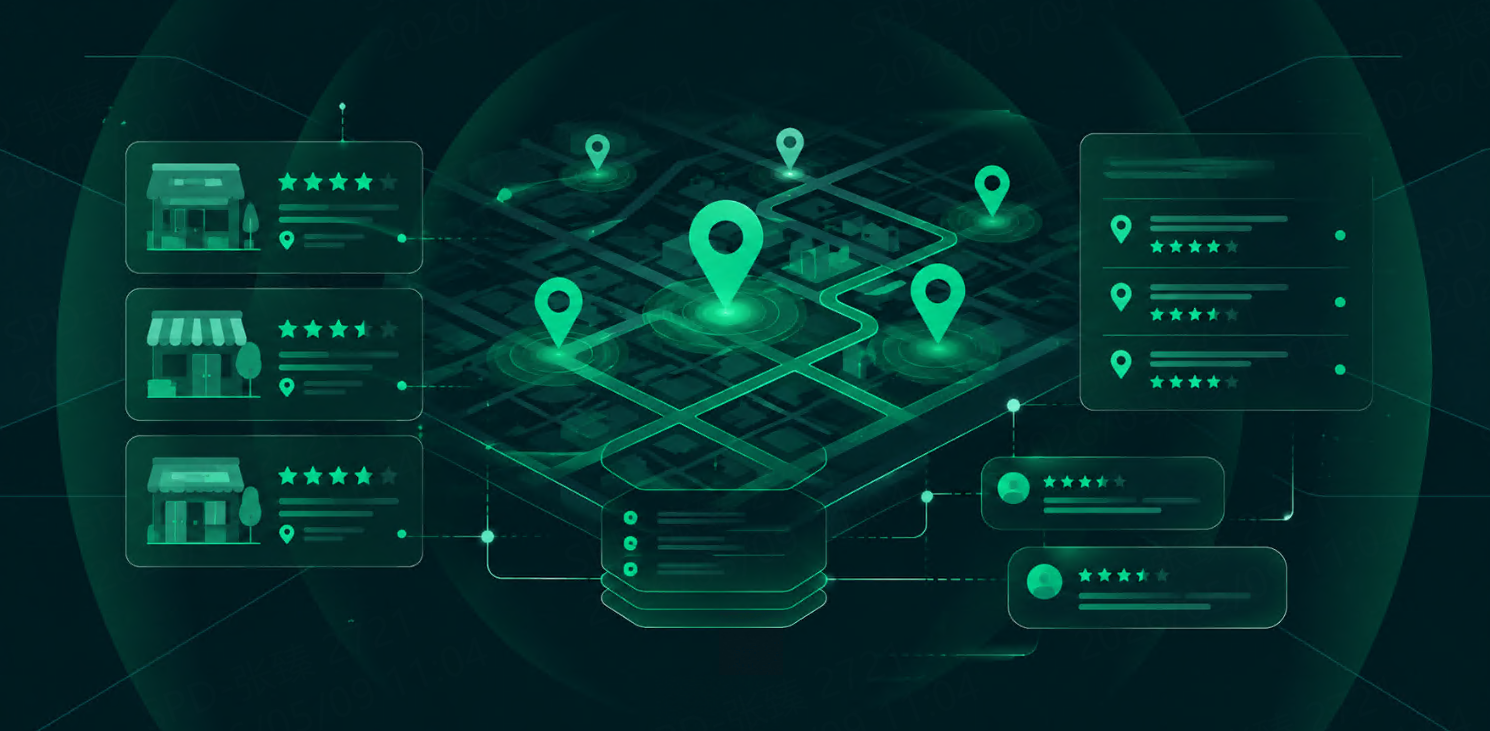



When people search for local services on Google, they often see a small map and a short list of nearby businesses near the top of the search results.
Searches like these can trigger it:
dentist near me
coffee shop in Austin
best plumber in Chicago
hotel near Times Square
car repair near me
That map-based business section is commonly called the Google Local Pack, Map Pack, or Local 3-Pack.
A Google Local Pack API helps you collect those local business results in a structured format, usually JSON. Instead of checking Google manually city by city, keyword by keyword, you send a localized search request and receive data such as business names, rankings, ratings, reviews, addresses, phone numbers, websites, place IDs, and coordinates.
For local SEO teams, agencies, multi-location brands, market research teams, and AI agents, this data is useful because Local Pack results show what users actually see for local search intent.
What is the Google Local Pack?
The Google Local Pack is the local business result block that appears in Google Search when a query has local intent.
It usually includes:
| Element | Meaning |
| Map | Shows the local search area |
| Business listings | Nearby or relevant businesses |
| Business name | Name of the local business |
| Rating | Average customer rating |
| Reviews | Review count |
| Address | Business location |
| Hours | Opening status or business hours |
| Website link | Link to the business website |
| Directions / call buttons | User action options |
Local Pack results appear for location-based searches such as “dentist near me,” “coffee shop in Austin,” or “best plumber in Chicago,” and they are often more important than standard blue links for local SEO visibility.
Google also explains that local rankings are mainly influenced by relevance, distance, and prominence, with reviews and positive ratings contributing to local ranking signals.
What is a Google Local Pack API?
A Google Local Pack API is an API that retrieves structured data from Google Local Pack results.
In practice, this usually means using a SERP API to:
Send a local search query
   ↓
Set location, language, device, and search type
   ↓
Receive structured Local Pack results
   ↓
Store, analyze, monitor, or feed the data into apps
A simplified request might look like this:
{
  "engine": "google",
  "type": "local",
  "q": "dentist near me",
  "location": "Austin, Texas, United States",
  "language": "en",
  "device": "desktop"
}
A simplified response might look like this:
{
  "query": "dentist near me",
  "location": "Austin, Texas, United States",
  "local_results": [
    {
      "position": 1,
      "name": "Example Dental Clinic",
      "rating": 4.8,
      "reviews": 326,
      "address": "123 Main St, Austin, TX",
      "phone": "+1 512-000-0000",
      "website": "https://example.com",
      "place_id": "example_place_id",
      "gps_coordinates": {
        "latitude": 30.2672,
        "longitude": -97.7431
      }
    }
  ]
}
This turns local search visibility into data your system can use.
What data can a Local Pack API return?
A Local Pack API usually returns business-level fields, not just standard organic search fields.
Common fields include:
| Field | Why it matters |
| Position | Shows local ranking position |
| Business name | Identifies the local business |
| Rating | Shows customer trust signal |
| Review count | Shows review volume |
| Address | Helps verify location |
| Phone number | Useful for lead and contact analysis |
| Website | Connects business to its site |
| Category | Helps classify business type |
| Hours | Shows availability |
| Place ID | Stable business identifier |
| Coordinates | Useful for map and grid tracking |
| Query | Search keyword used |
| Location | City, neighborhood, ZIP code, or coordinates |
| Timestamp | Needed for monitoring changes |
For Local Pack scraping, useful fields include position, business name, rating, review count, address, phone number, website, place ID, and GPS coordinates.
How does a Google Local Pack API work?
A Local Pack API usually works in five steps.
Step 1: Choose local keywords
Start with keywords that show local intent.
Examples:
dentist near me
coffee shop downtown Seattle
emergency plumber Chicago
best sushi restaurant San Diego
law firm in Miami
You can track branded keywords, non-branded keywords, service keywords, and “near me” queries.
Step 2: Define the search location
Local search changes by geography. A business can rank well in one neighborhood and disappear a few miles away.
You can define location by:
| Location type | Example |
| City | Austin, Texas |
| Neighborhood | Brooklyn Heights, New York |
| ZIP code | 94103 |
| Coordinates | latitude and longitude |
| Grid points | multiple points across a city |
For local SEO, location is not a small setting. It is part of the query itself.
Step 3: Send the API request
Your system sends the keyword and location to a Local Pack API.
The API handles the search request and returns structured results.
A typical workflow is:
Keyword + location
   ↓
Local Pack API
   ↓
Business listings
   ↓
Parser or database
Step 4: Normalize and store the results
Do not only store the business name.
Store the full search context:
| Context | Why it matters |
| Query | What was searched |
| Location | Where the search was simulated |
| Language | Result language |
| Device | Desktop or mobile |
| Timestamp | When the data was collected |
| Business position | Local ranking |
| Business fields | Name, rating, reviews, address, website |
This allows you to compare results over time.
Step 5: Analyze changes
Once you collect Local Pack results regularly, you can monitor:
| Metric | Meaning |
| Local rank position | Where a business appears |
| Local visibility share | How often a business appears across keywords |
| Competitor frequency | Which competitors appear most often |
| Review trend | Rating and review count changes |
| Location coverage | Which neighborhoods show the business |
| Ranking movement | Gains and losses over time |
This is where Local Pack data becomes useful for reporting, dashboards, alerts, and AI workflows.
Local Pack API vs Google Places API
This is an important distinction.
A Local Pack API is usually used to collect visible Google Search local results.
A Google Places API is an official Google Maps Platform API for location and place data. Google describes the Places API as a service that accepts HTTP requests and returns formatted location data and imagery about establishments, geographic locations, or points of interest.
They are related, but they are not the same.
| API type | Main purpose | Best for |
| Local Pack API | Collect local business results as they appear in Google Search | Local SEO tracking, competitor monitoring, SERP analysis |
| Google Places API | Retrieve place data from Google Maps Platform | App location features, place search, autocomplete, maps products |
Use a Local Pack API when your question is:
Who appears in Google Local Pack for this keyword and location?
Use Google Places API when your question is:
What place data do I need for my app or map feature?
Why do teams use Local Pack APIs?
1. Local SEO rank tracking
Local SEO teams use Local Pack APIs to track business visibility by keyword and location.
For example:
Keyword: emergency plumber
Location: Chicago
Goal: Track which businesses appear in the Local Pack every day
This helps answer:
| Question | Data needed |
| Is our business visible? | Position and business name |
| Did our ranking improve? | Historical position |
| Who outranks us? | Competitor listings |
| Are reviews affecting trust? | Rating and review count |
| Which locations underperform? | City or grid-level tracking |
2. Competitor monitoring
Local Pack data shows the competitive landscape in each market.
You can track:
| Signal | Why it matters |
| New competitors | A new business enters the Local Pack |
| Ranking changes | Competitors move up or down |
| Review growth | Competitors gain trust signals |
| Category overlap | Similar businesses compete for the same query |
| Market coverage | Competitors dominate certain neighborhoods |
For agencies and multi-location brands, this is much more useful than one generic ranking number.
3. Multi-location brand reporting
Restaurants, clinics, hotels, gyms, schools, retailers, and service chains often need to track many locations.
A Local Pack API can help compare:
| Report | Example |
| Branch visibility | Which branches appear most often |
| City performance | Which cities are weak |
| Keyword coverage | Which services rank locally |
| Review strength | Which branches need reputation work |
| Competitor overlap | Which brands appear in the same markets |
4. Lead generation and market research
Local Pack data can also support market research.
For example, a B2B team might search for:
roofing contractors in Dallas
dental clinics in Phoenix
law firms in Miami
real estate agencies in Denver
Then collect business names, websites, phone numbers, ratings, and categories to understand the local market.
5. AI agents and RAG workflows
AI agents need current local data.
A Local Pack API can give an AI agent structured local search context, such as:
| Agent task | Local Pack data needed |
| Find local businesses | Name, category, address |
| Compare options | Rating, reviews, position |
| Build local research reports | Listings by keyword and city |
| Recommend nearby services | Location and business fields |
| Monitor local market changes | Historical snapshots |
Local Pack results can act as a source discovery layer for AI agents and RAG workflows, especially for location-based tasks.
How TalorData fits into Local Pack workflows
TalorData can be used as the structured SERP data layer for Local Pack and local search workflows.
A practical workflow looks like this:
Local keywords
   ↓
Target locations
   ↓
TalorData SERP API
   ↓
Structured Local Pack / Maps data
   ↓
Rank tracking, competitor monitoring, dashboards, AI agents
TalorData SERP API helps teams access real-time SERP data for local SEO tracking, rank monitoring, competitor research, and market intelligence. It supports geo-targeted results, structured JSON or HTML responses, major search engines, and free responses for testing. Start free testing now>>
What to look for in a Local Pack API
When choosing a Local Pack API, check these points:
| Requirement | Why it matters |
| Location control | Local results change by city, neighborhood, and coordinates |
| Structured JSON | Easier to store and analyze |
| Business fields | Name, address, phone, rating, reviews, website |
| Place ID support | Helps match the same business over time |
| Coordinates | Needed for maps and grid tracking |
| Mobile / desktop options | Results may differ by device |
| Stable schema | Reduces parser maintenance |
| Raw HTML option | Useful for debugging |
| Successful-request billing | Helps control cost |
| Scale | Needed for many keywords and locations |
Do not choose only by price. Choose based on whether the API returns the fields your workflow actually needs.
Final thoughts
A Google Local Pack API helps turn local search results into structured business data.
It helps teams collect business names, rankings, ratings, reviews, addresses, phone numbers, websites, place IDs, coordinates, and search context.
For local SEO teams, this data supports rank tracking and reporting. For agencies, it helps monitor clients and competitors. For multi-location brands, it shows market visibility by city or neighborhood. For AI teams, it gives agents fresh local business context.
The simplest way to think about it is this:
Google Local Pack shows who is visible locally.
A Local Pack API turns that visibility into data.
FAQ
What is a Google Local Pack API?
A Google Local Pack API collects structured data from the local business results that appear in Google Search for local-intent queries. It can return business names, positions, ratings, reviews, addresses, phone numbers, websites, place IDs, and coordinates.
Is Google Local Pack the same as Google Maps?
Not exactly. Local Pack appears inside Google Search results, while Google Maps is a map-based business search experience. They may share business data, but layout, ranking context, and available fields can differ.
What fields should I extract from Local Pack results?
Start with query, location, timestamp, business name, position, rating, review count, address, phone number, website, category, place ID, and coordinates.
How is a Local Pack API different from Google Places API?
A Local Pack API is mainly for collecting visible Google Search local results. Google Places API is an official Google Maps Platform service for retrieving place and location data for apps.
Who needs Local Pack API data?
Local SEO teams, agencies, multi-location brands, SaaS rank tracking platforms, market research teams, and AI agents can all use Local Pack data.