Why Multi-Engine Search Data Matters for AI Applications
Learn why multi-engine search data matters for AI applications. This guide explains how search data from Google, Bing, Yandex, DuckDuckGo, and other engines can improve source discovery, RAG grounding, AI agent decisions, market research, SEO workflows, brand monitoring, and competitor tracking.



AI applications are only as useful as the context they can access.
A chatbot can answer from model memory.
A RAG system can answer from indexed documents.
An AI agent can call tools and perform tasks.
But when an application needs fresh public information, one question quickly appears:
Which search source should it trust?
Many AI workflows start with a single search engine. That is simple, but it can also be limiting. Different search engines may surface different pages, rank sources differently, emphasize different content types, and reflect different user behaviors.
For AI applications that depend on external web context, single-engine search data can create a narrow view of the web.
Multi-engine search data solves this problem by giving AI systems access to search results from more than one search engine, such as Google, Bing, Yandex, and DuckDuckGo. TalorData provides structured SERP data from Google and major search engines, with JSON and HTML response formats, geo-targeted search, and use cases across AI agents, RAG, SEO monitoring, competitor tracking, market research, and news monitoring.Get free trial now>>
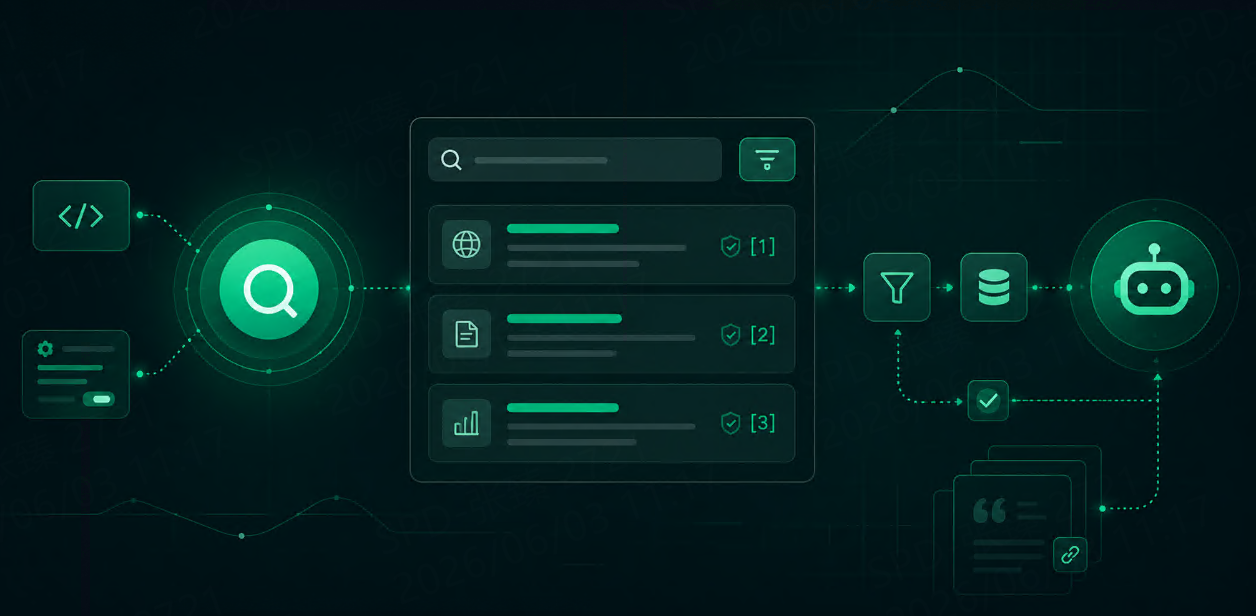
A practical workflow looks like this:
User question or workflow task
↓
AI application
↓
Multi-engine search request
↓
Structured SERP data from multiple engines
↓
Result normalization and source filtering
↓
Answer, report, alert, or RAG workflow
This article explains why multi-engine search data matters for AI applications, when to use it, how to design a clean workflow, and how TalorData helps developers build search-aware AI systems.
What Is Multi-Engine Search Data?
Multi-engine search data means collecting structured search results from more than one search engine.
Instead of relying only on one source, an AI application can compare results across engines.
For example:
| Engine | Possible Role in AI Workflows |
| Broad web visibility, SEO research, market monitoring | |
| Bing | Alternative web ranking perspective and Microsoft ecosystem visibility |
| Yandex | Useful for certain regional and multilingual search contexts |
| DuckDuckGo | Useful as an additional privacy-focused search perspective |
A multi-engine result set may include:
| Field | Description |
| query | Search query |
| search_engine | Google, Bing, Yandex, DuckDuckGo, or another engine |
| country | Target country |
| language | Search result language |
| device | Desktop or mobile |
| position | Ranking position |
| title | Search result title |
| url | Source URL |
| domain | Source domain |
| snippet | Search result preview |
| collected_at | Collection time |
A simplified record may look like this:
{
  "query": "AI customer support tools",
  "search_engine": "google",
  "country": "us",
  "language": "en",
  "position": 1,
  "title": "Best AI Customer Support Tools for Growing Teams",
  "url": "https://www.example.com/ai-customer-support-tools",
  "domain": "example.com",
  "snippet": "Compare AI support tools by automation, routing, integrations, and pricing.",
  "collected_at": "2026-07-15T09:00:00Z"
}
The key point is not just collecting more data.
The key point is collecting broader search context.
Why Single-Engine Search Can Be Limiting
A single search engine can be useful, but it does not represent the entire public web.
For many AI applications, this creates blind spots.
| Limitation | What Can Go Wrong |
| Narrow source coverage | The app may miss useful pages surfaced elsewhere |
| Ranking bias | The app may overvalue one engine’s ranking logic |
| Regional gaps | Some engines may perform differently by market |
| Source repetition | The same domains may dominate the context |
| Weak comparison | The system cannot tell whether a result is broadly visible |
| Fragile grounding | RAG or agent answers may rely on a narrow source set |
This matters because AI systems often treat retrieved context as the basis for an answer.
If the context is narrow, the answer can be narrow.
If the source discovery layer is weak, the final response may still sound confident, because apparently confidence is cheap and verification is the hard part.
Why Multi-Engine Search Matters for AI Applications
Multi-engine search data improves AI applications in several practical ways.
1. Better Source Discovery
AI research tools often need to find useful source URLs before they can summarize, compare, or answer.
A single engine may miss pages that another engine surfaces.
Multi-engine search helps the system discover a wider pool of candidate sources.
Example workflow:
Search the same query across multiple engines
↓
Collect titles, URLs, snippets, and domains
↓
Merge results into one source pool
↓
Deduplicate URLs and domains
↓
Select the most relevant sources
↓
Use selected sources in the AI workflow
This is useful for:
| AI Application | Why Source Discovery Matters |
| Research assistant | Needs diverse public sources |
| RAG pipeline | Needs relevant source URLs before retrieval |
| Market intelligence agent | Needs broader public signals |
| Content brief generator | Needs current ranking and reference pages |
| Competitor monitor | Needs visible competitor pages across engines |
A better source pool usually produces better downstream answers.
2. Stronger RAG Grounding
RAG systems rely on retrieved context.
If a RAG workflow only discovers sources from one search engine, it may overfit to one ranking environment.
Multi-engine data can help RAG systems discover sources that are:
- Repeated across engines
- Unique to one engine
- Strongly visible in one region
- Relevant to specific languages
- Useful for specific content types
A RAG source discovery workflow can look like this:
User asks a question
↓
Search across multiple engines
↓
Normalize SERP results
↓
Deduplicate URLs
↓
Score source relevance
↓
Fetch selected pages
↓
Use extracted content in RAG
Multi-engine search is not a replacement for retrieval quality.
It improves the source discovery step before retrieval begins.
Search finds candidate sources.
RAG uses selected source content.
The two steps should not be mashed together like leftover soup.
3. Better AI Agent Decisions
AI agents need tools to act on external information.
When an agent only has one search tool tied to one engine, it may make decisions based on one search environment.
Multi-engine search gives agents more context.
For example, an AI agent can answer:
| User Question | Why Multi-Engine Helps |
| Which sources are broadly visible for this topic? | Compare overlap across engines |
| Is this competitor visible outside Google? | Check multiple search environments |
| Which domains appear consistently? | Identify recurring sources |
| Which sources are unique to one engine? | Find hidden or niche pages |
| What should we use as source context? | Select stronger source candidates |
This is useful for agents that perform:
- Web research
- Competitive analysis
- SEO monitoring
- Brand monitoring
- Market research
- Source selection
- Automated reporting
The agent does not need to search every engine for every task.
But when reliability matters, multi-engine search gives the agent more evidence to work with.
4. More Reliable Market Research
Market research depends on visible public signals.
A single search engine may show one view of a topic. Multi-engine search can reveal whether a trend, brand, product, or source appears consistently across different search environments.
Example:
Query: "AI customer support software"
Engines: Google, Bing, DuckDuckGo
Country: US
Language: English
The system can compare:
| Signal | Question |
| Domain overlap | Which domains appear across multiple engines? |
| Unique results | Which pages appear only in one engine? |
| Ranking differences | Which sources rank higher in different engines? |
| Content angles | What topics are emphasized in titles and snippets? |
| Source types | Are results mostly blogs, product pages, reviews, or reports? |
This helps AI market research workflows avoid drawing conclusions from one search result page.
A single SERP is a snapshot.
Multi-engine SERP data is a wider signal set.
5. Better Competitor Monitoring
Competitor visibility is not limited to one search engine.
A competitor may appear strongly in one engine and weakly in another. A review site may dominate Google but not Bing. A regional source may appear in Yandex but not elsewhere.
Multi-engine search data helps answer:
| Question | Why It Matters |
| Which competitors appear across engines? | Measures broader visibility |
| Which competitor domains are gaining exposure? | Detects market movement |
| Which pages are unique to one engine? | Finds hidden opportunities |
| Which content formats rank well? | Helps content and SEO planning |
| Which search engines show different competitors? | Improves regional or audience analysis |
A competitor monitoring workflow can look like this:
Track competitor keywords
↓
Collect SERP data from multiple engines
↓
Normalize domains and URLs
↓
Group results by competitor
↓
Compare visibility over time
↓
Send alerts or generate reports
This gives AI monitoring systems a stronger signal than checking one engine and pretending the rest of the web politely agrees.
6. Better Brand Monitoring
Brand monitoring often depends on public search visibility.
When users search for a brand, different engines may show:
- Official website pages
- Review pages
- Social profiles
- News articles
- Support pages
- Competitor comparison pages
- Marketplace listings
- Negative mentions
Multi-engine search helps brand monitoring systems understand how a brand appears across search environments.
Useful brand monitoring fields include:
| Field | Why It Matters |
| search_engine | Shows where the result appeared |
| query | Brand or product query |
| position | Shows visibility |
| title | Reveals message framing |
| url | Shows source page |
| domain | Identifies source owner |
| snippet | Shows public preview |
| sentiment_label | Optional AI classification |
| collected_at | Enables tracking over time |
AI can then summarize:
Brand visibility increased on Bing.
A new comparison page appeared on Google.
Official pages remain visible across all tracked engines.
One review domain appears only on DuckDuckGo.
That is more useful than a generic brand mention report with no search context.
7. Better SEO and Content Intelligence
SEO workflows often start with Google, which makes sense for many markets.
But AI content systems can benefit from broader search data.
Multi-engine SERP data helps answer:
| SEO Question | Why Multi-Engine Helps |
| Which pages are broadly visible? | Stronger source selection |
| Which titles appear across engines? | Better title and angle analysis |
| Which domains dominate search visibility? | Better competitor mapping |
| Which sources differ by engine? | Better content gap discovery |
| Which snippets appear repeatedly? | Better messaging analysis |
For content intelligence, this matters because AI systems often generate briefs from search results.
If the brief is based on one narrow SERP, the output can become repetitive.
Multi-engine data gives the brief more input diversity.
That does not mean the AI should copy more sources.
It means the AI has more context before deciding what matters.
8. Better Regional and Multilingual AI Workflows
Search behavior changes by country and language.
Multi-engine search becomes especially useful when building AI applications for global or multilingual markets.
Example dimensions:
| Dimension | Example |
| Engine | Google, Bing, Yandex, DuckDuckGo |
| Country | US, UK, Germany, Japan |
| Language | English, German, Japanese |
| Device | Desktop, mobile |
| Query language | English query, local-language query |
A global research workflow can compare:
Same query across multiple engines
Same query across multiple countries
Same query across multiple languages
Same query across desktop and mobile
This helps AI applications avoid treating one market’s search results as global truth.
A search result from one region is not the world. Humanity keeps learning this and then forgetting it immediately.
How to Design a Multi-Engine Search Workflow
A good workflow should be structured, not just bigger.
More search engines do not automatically create better AI output.
The workflow should define:
| Design Question | Recommended Approach |
| Which engines should be searched? | Start with engines relevant to your market |
| How many results per engine? | Start with top 5 or top 10 |
| How should results be normalized? | Use a shared schema |
| How should duplicates be handled? | Deduplicate URLs and group domains |
| How should sources be selected? | Score by relevance, authority, and overlap |
| When should pages be fetched? | Only after source selection |
| How should results be logged? | Store query, engine, market, and timestamp |
A simple architecture:
Input query
↓
Multi-engine search request
↓
Normalize results into shared schema
↓
Deduplicate URLs
↓
Group by domain
↓
Score sources
↓
Select URLs
↓
Use in agent, RAG, report, or alert
A Shared Schema for Multi-Engine SERP Data
To compare results across engines, use a consistent schema.
Example:
{
  "query": "AI customer support tools",
  "search_engine": "google",
  "country": "us",
  "language": "en",
  "device": "desktop",
  "position": 1,
  "title": "Best AI Customer Support Tools",
  "url": "https://www.example.com/ai-customer-support-tools",
  "domain": "example.com",
  "snippet": "Compare AI customer support tools by features, pricing, and integrations.",
  "result_type": "organic",
  "collected_at": "2026-07-15T09:00:00Z"
}
Core fields:
| Field | Required? | Why |
| query | Yes | Reproduce the search |
| search_engine | Yes | Compare engines |
| country | Yes | Preserve market context |
| language | Yes | Preserve language context |
| device | Recommended | Compare desktop and mobile |
| position | Yes | Track ranking |
| title | Yes | Analyze result framing |
| url | Yes | Identify source |
| domain | Recommended | Group sources |
| snippet | Recommended | Preview content |
| collected_at | Yes | Track freshness |
Without a shared schema, multi-engine data becomes a pile of mismatched objects.
The AI can still read it, sure. It can also read a messy spreadsheet. That does not make the spreadsheet good.
How to Score Sources Across Engines
Multi-engine data becomes more useful when you score sources before sending them to an AI model.
Useful signals include:
| Signal | Meaning |
| Engine overlap | Appears in multiple engines |
| Average position | Ranks highly across engines |
| Domain authority | Comes from a trusted source |
| Query relevance | Title and snippet match the task |
| Content freshness | Recent result or recently updated page |
| Source diversity | Avoids overusing one domain |
| Result type | Organic, news, image, video, maps, or shopping |
Example scoring logic:
+3 if URL appears in more than one engine
+2 if average position is within top 5
+2 if domain is on an approved source list
+1 if snippet strongly matches the user question
-2 if duplicate domain already selected
-3 if result is irrelevant to the task
This helps the AI application use better context instead of simply stuffing every result into the prompt, because apparently the internet’s solution to everything is “more text.”
When Not to Use Multi-Engine Search
Multi-engine search is useful, but not always necessary.
Do not use it by default when the task is simple.
| Task | Better Approach |
| Quick lookup | Single engine may be enough |
| Internal knowledge Q&A | Use internal knowledge base |
| User account support | Use internal APIs |
| Static documentation search | Use indexed docs |
| Low-risk casual answers | Avoid unnecessary search cost |
| Narrow local workflow | Use the most relevant engine and location |
Multi-engine search should be used when broader source discovery improves the outcome.
For production AI workflows, this usually means:
- Research quality matters
- Source diversity matters
- Search visibility matters
- Market comparison matters
- Competitor visibility matters
- Regional differences matter
- RAG source selection matters
How TalorData Supports Multi-Engine Search Data
TalorData gives developers a structured way to collect SERP data from Google and major search engines and use it in AI workflows, RAG pipelines, SEO tools, and monitoring systems.
With TalorData, teams can:
| Capability | Why It Helps |
| Query multiple search engines | Build broader search context |
| Receive structured JSON | Make results easier to parse |
| Use geo-targeted search | Compare markets and regions |
| Track search results over time | Build monitoring workflows |
| Normalize SERP data | Feed clean context into AI systems |
| Use search data in agents | Let AI tools retrieve current web context |
| Support RAG source discovery | Select URLs before retrieval |
A TalorData-powered workflow can look like this:
AI application
↓
TalorData multi-engine SERP request
↓
Structured results from selected engines
↓
Normalized source pool
↓
Deduplication and filtering
↓
Agent answer, RAG retrieval, SEO report, or monitoring alert
For developers, the value is simple:
TalorData turns search results into structured data that AI applications can use.
Final Thoughts
Multi-engine search data matters because AI applications need more than one narrow view of the public web.
For research assistants, RAG systems, AI agents, SEO tools, market intelligence platforms, brand monitoring, and competitor tracking, multi-engine SERP data helps improve:
source discovery
source diversity
search visibility analysis
regional comparison
RAG grounding
agent decision-making
monitoring quality
The goal is not to collect as much search data as possible.
The goal is to collect the right search context, normalize it, filter it, and use it responsibly.
A good AI application does not just ask:
What did one search engine return?
It asks:
Which sources appear across search environments, which sources are unique, and which results are useful for this task?
That is where multi-engine search data becomes valuable.
FAQ
What is multi-engine search data?
Multi-engine search data is structured search result data collected from more than one search engine, such as Google, Bing, Yandex, or DuckDuckGo.
Why does multi-engine search matter for AI applications?
It gives AI applications broader source discovery, better comparison, stronger RAG source selection, and more reliable context than relying on a single search engine.
Should every AI application use multi-engine search?
No. Use it when source diversity, market comparison, competitor visibility, or RAG source discovery matters. For simple lookups, one engine may be enough.
How does multi-engine search help RAG?
It helps the system discover a better source pool before retrieval. Selected URLs can then be fetched, extracted, indexed, and used as RAG context.
How does TalorData support multi-engine search workflows?
TalorData provides structured SERP data from Google and major search engines, helping developers feed clean search context into AI agents, RAG pipelines, SEO tools, market monitoring systems, and automated reports.