Tavily Alternative: Why AI Agents Still Need Structured SERP Data
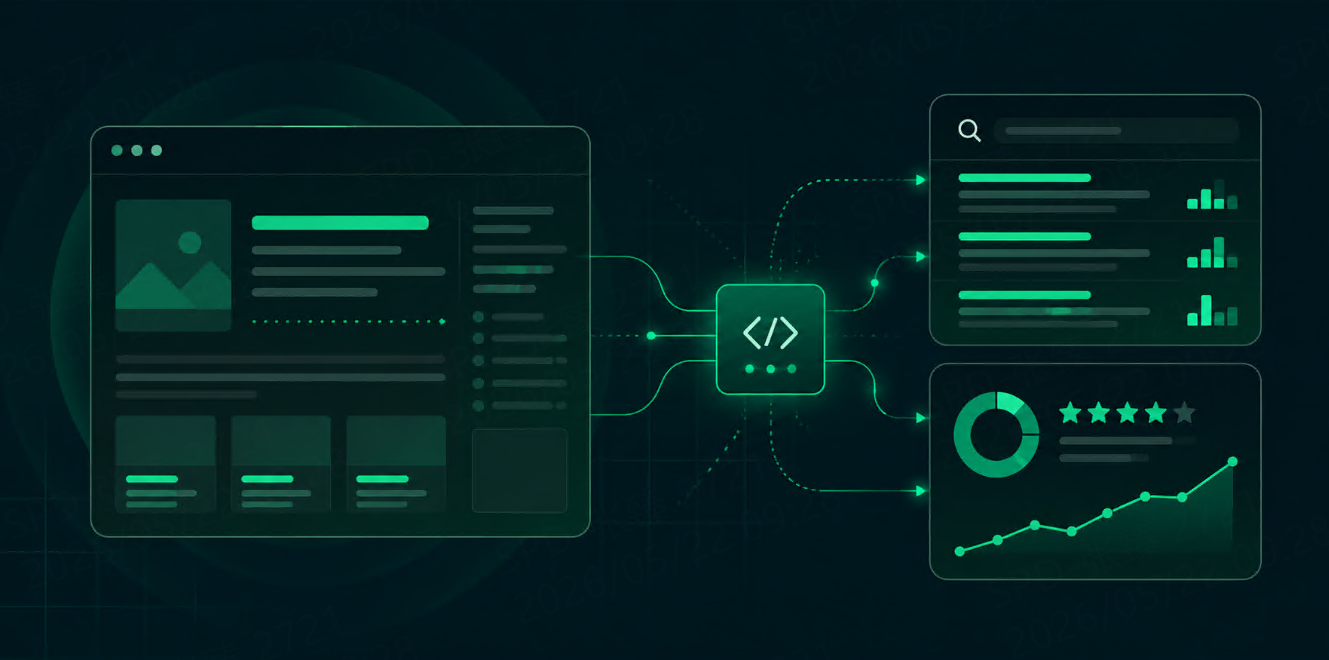
Explore why AI agents need more than traditional search APIs. Learn how structured SERP data helps AI applications improve accuracy, reasoning, and real-time search capabilities.




Introduction
AI agents are changing the way applications interact with information.
Traditional software usually follows predefined workflows:
Input → Processing → Output
But AI agents operate differently.
They need to:
- Understand user intent
- Search for external information
- Evaluate multiple sources
- Extract relevant knowledge
- Make decisions based on changing data
This means search is no longer just a user-facing feature.
For AI agents, search has become a critical intelligence layer.
Tools like Tavily have gained attention because they make web search easier for AI applications. They help developers connect large language models with external information sources without building search infrastructure from scratch.
However, as AI agents move from prototypes into production systems, a deeper requirement appears:
AI agents need structured search data, not just search results.
A production-grade AI agent does not only need an answer.
It needs:
- Where the information came from
- How search results are ranked
- What competitors or alternatives exist
- Which sources are reliable
- How the search landscape changes over time
This is where structured SERP data becomes essential.
AI Agents Need More Than a Search Box
Many AI applications start with a simple architecture:
User Query

↓

LLM

↓

Search Tool

↓

Generated Answer
This works for basic question answering.
But real-world AI agents require more context.
Consider an AI market research agent.
A user asks:
“Compare the best project management tools for enterprise teams.”
A basic search integration may return several web pages.
But an effective research agent needs to understand:
- Which products consistently rank at the top?
- Which pages dominate search visibility?
- What features are repeatedly mentioned?
- How competitors position themselves?
- Are search results different by country or language?
The difference is important.
A search result is an output.
A SERP dataset is intelligence.
AI agents become more reliable when they can reason over structured information instead of processing disconnected web pages.
The Limitation of Generic Search APIs in Production AI Systems
Many AI developers initially focus on retrieval:
“Can my model find relevant information?”
But production systems face a harder question:
“Can my model understand the search environment?”
A generic search response often provides:
- A title
- A URL
- A snippet
This is useful, but limited.
For deeper reasoning, agents need additional context:
- Ranking position
- SERP layout
- Result type
- Domain information
- Competitor relationships
- Search engine differences
- Location-specific results
Without structured SERP data, an AI system may retrieve information but fail to understand why that information matters.
For example:
Two articles may both answer the same question.
But one ranks first on Google while the other ranks on page three.
That difference contains valuable signals:
- Authority
- Search intent alignment
- Content quality
- User demand
Structured SERP data allows AI agents to access these signals.
Why Structured SERP Data Matters for AI Reasoning
Large language models are powerful reasoning engines.
However, reasoning quality depends heavily on input quality.
Poor input creates unreliable output.
For AI search applications, structured SERP data improves reasoning in several ways.
First, it creates a consistent data format.
Instead of processing unpredictable web pages, the AI agent receives normalized information:
Query

↓

Search Engine

↓

Rank Position

↓

URL

↓

Title

↓

Snippet

↓

SERP Features
This allows AI systems to compare and analyze search results more effectively.
Second, structured data makes automation possible.
An AI SEO agent can automatically:
- Monitor ranking changes
- Detect competitor movements
- Identify content gaps
- Analyze market trends
Third, structured SERP data creates historical intelligence.
Search results change constantly.
A single search snapshot shows what exists today.
Historical SERP data shows:
- What changed
- When it changed
- Which competitors gained visibility
- Which strategies are working
This is essential for advanced AI applications.
Tavily and the Evolution of AI Search Infrastructure
Tavily has helped many developers solve an important problem:
Connecting AI applications with web search.
This was a major step forward.
Before these tools existed, developers often needed to build:
- Search integrations
- Crawling systems
- Parsing pipelines
- Source extraction workflows
However, AI infrastructure is evolving.
The next generation of AI applications requires more than retrieving documents.
They need structured understanding of the search environment.
This is especially important for applications such as:
- AI research agents
- SEO intelligence platforms
- Market analysis systems
- Competitive monitoring tools
- Automated content workflows
These applications do not only ask:
“Find information.”
They ask:
“Analyze the entire search landscape.”
That requires SERP-level data.
Search API vs SERP API: A Critical Difference for AI Agents
The difference between Search API and SERP API is often misunderstood.
A Search API focuses on retrieving information.
A SERP API focuses on reproducing and structuring the search results environment.
The distinction:
Search API:
Query

↓

Relevant Documents
SERP API:
Query

↓

Search Engine Results Page

↓

Ranking Data

↓

Competitor Information

↓

SERP Features

↓

Structured Results
For simple retrieval tasks, a Search API may be enough.
For intelligent agents that analyze, compare, and make decisions, SERP data provides much deeper context.
Building AI Agents with Better Search Foundations
A modern AI agent architecture increasingly looks like this:
User Request

↓

Agent Reasoning Layer

↓

SERP API

↓

Structured Search Data

↓

Knowledge Processing

↓

Final Decision
The SERP API becomes an external perception layer.
Similar to how humans use search engines:
We do not only read one result.
We compare:
- Multiple sources
- Ranking positions
- Authority signals
- Different perspectives
AI agents need similar capabilities.
The better the search foundation, the better the agent’s decisions.
Why TalorData Is Built for AI Search Applications
TalorData provides structured SERP API infrastructure designed for developers building modern AI applications.
The focus is not simply returning search results.
The goal is enabling applications to understand search environments.
With structured SERP data, developers can build:
- AI research agents
- SEO automation systems
- Search intelligence platforms
- RAG pipelines
- Competitive analysis tools
Instead of spending engineering resources maintaining scraping infrastructure, teams can focus on improving their AI products.
The Future of AI Search Is Structured Intelligence
AI agents are moving beyond simple question answering.
The next generation of agents will:
- Research markets
- Monitor competitors
- Analyze trends
- Generate recommendations
- Automate decisions
All of these capabilities depend on reliable external information.
Search is becoming a core intelligence layer.
But the future is not just about accessing the web.
It is about understanding the web.
Structured SERP data provides the foundation for that understanding.
Conclusion
AI agents need more than search results.
They need structured information that allows them to reason about the search environment.
While tools like Tavily make web search integration easier, advanced AI applications require deeper search intelligence.
SERP API provides the structured data layer needed for AI systems to analyze rankings, competitors, trends, and real-time search changes.
The future of AI search will not be built on retrieving more pages.
It will be built on understanding search data.
CTA
Build smarter AI agents with structured SERP data.
Explore TalorData SERP API and create AI applications with real-time search intelligence.