How to Use TalorData with LangChain for Real-Time Search
Learn how to use TalorData with LangChain to add real-time search data to AI applications and agents for research, SEO, market intelligence, and more.



Large language models can answer questions, analyze information, and support increasingly complex AI workflows.
However, one limitation remains: language models do not automatically have access to real-time information from the web.
For many AI applications, current search data is essential.
An AI agent may need to search Google for the latest information, monitor competitors, analyze search results, research a market, or retrieve fresh information before generating an answer.
This is where TalorData and LangChain can work together.
TalorData is now listed as a tool integration in LangChain’s official JavaScript integration documentation, making it easier for developers to discover and use TalorData as part of their LangChain applications.
View TalorData in LangChain Integrations
In this guide, we’ll explore how to use TalorData with LangChain and how real-time SERP data can support AI applications and agents.
Why Use TalorData with LangChain?
LangChain provides a framework for building applications powered by language models.
These applications can use external tools to retrieve information and perform tasks beyond the knowledge available inside an LLM.
Search is one of the most useful capabilities for AI applications.
For example, an AI agent may need to:
- Search for the latest information
- Research a company or market
- Monitor competitors
- Analyze search rankings
- Retrieve news and trends
- Find relevant web results before generating an answer
TalorData provides structured search data that can be used as an external data source for these workflows.
By combining TalorData with LangChain, developers can give their AI applications access to real-time search information.
The basic idea is simple:
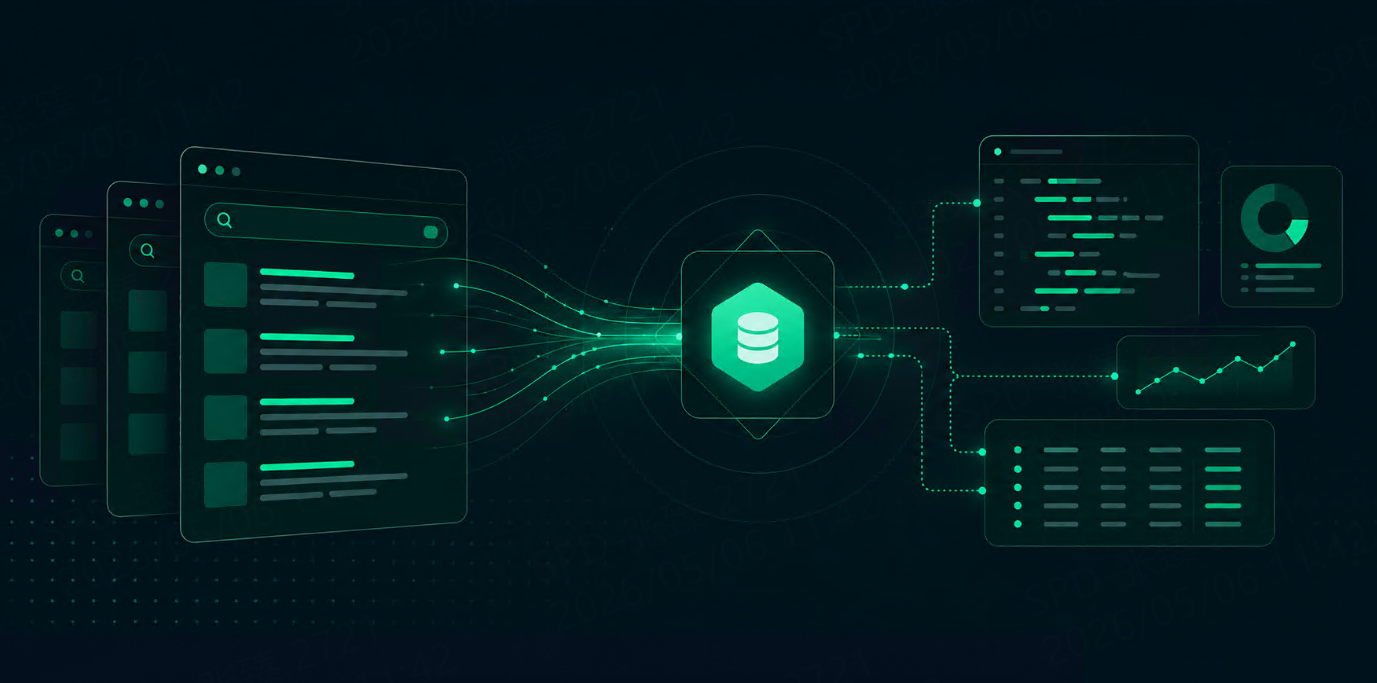
User Query → LangChain → TalorData Search → Real-Time Results → LLM Analysis → Answer
TalorData handles search data retrieval, while LangChain helps orchestrate the workflow and connect search results with language models.
TalorData Is Available in LangChain’s Official Integration Documentation
LangChain maintains a large ecosystem of integrations for models, vector stores, tools, retrievers, and other components.
TalorData is listed under the Tools category in the official LangChain JavaScript integration provider documentation. The listing describes TalorData as a unified SERP API across multiple search engines with geo-targeting capabilities.
This makes TalorData easier for LangChain developers to discover when looking for search and external data tools.
Explore the LangChain JavaScript Tools Integrations
For developers building AI agents and search-powered applications, this creates a direct connection between LangChain workflows and TalorData’s real-time search infrastructure.
Getting Started with TalorData and LangChain
The TalorData LangChain integration is designed to help developers connect real-time search data with LangChain applications.
You can follow the official TalorData setup guide for the integration process:
How to Set Up TalorData with LangChain
The general workflow involves:
1. Get a TalorData API Key
First, create a TalorData account and generate an API key for accessing SERP data.
The API can then be used by your LangChain application to retrieve search results.
2. Install the Required Integration
Add the TalorData integration to your LangChain JavaScript or TypeScript project.
This allows your application to connect LangChain workflows with TalorData search capabilities.
3. Configure Your API Credentials
Configure your TalorData API credentials in the application environment.
Once configured, your LangChain application can send search requests through TalorData.
4. Use Search Results in Your AI Workflow
After retrieving search results, you can pass the returned data to an LLM for further analysis.
For example:
Search Query → TalorData → Structured SERP Results → LangChain → LLM → Final Answer
This makes it possible to combine real-time information retrieval with AI reasoning and generation.
Build AI Applications with Real-Time Search
Adding TalorData to LangChain opens up several useful application scenarios.
AI Research Assistants
A research assistant can search for relevant information before generating an answer.
Instead of relying entirely on the language model’s existing knowledge, the application can retrieve current search results and use them as context.
For example:
“What are the latest developments in AI search?”
The AI workflow can first search for relevant results and then analyze the information before responding.
This approach can help applications work with more current information.
AI Agents with Search Capabilities
AI agents often need access to external tools.
A LangChain agent can decide when additional information is required and use TalorData to retrieve relevant search results.
For example, an agent could:
- Receive a user question.
- Determine whether web information is needed.
- Search using TalorData.
- Analyze the returned results.
- Generate a final response.
This makes search a tool that the AI agent can use when necessary.
SEO Analysis
Search data is also useful for SEO applications.
A LangChain workflow can retrieve search results for a list of keywords and pass the data to an LLM for analysis.
The AI application could help identify:
- Ranking websites
- Competitor visibility
- Content opportunities
- Keyword patterns
- Search result changes
This can support automated SEO research and reporting workflows.
Competitor and Market Research
Real-time search data can also be useful for market intelligence.
For example, an AI application could search for a company, product category, or industry topic and then analyze the returned results.
The workflow could help answer questions such as:
- Which companies appear most frequently?
- What topics are currently being discussed?
- Which competitors have strong search visibility?
- What trends are emerging in a market?
LangChain can coordinate the workflow, while TalorData provides the external search data.
Why Structured Search Data Matters for AI
AI applications work better when information can be processed efficiently.
Instead of manually extracting information from search pages, developers can use structured SERP data as an input for AI workflows.
Search result data may include information such as:
- Result titles
- URLs
- Snippets
- Rankings
- Search result types
This makes it easier to pass relevant search information into LangChain workflows and language models.
The result is a clearer separation between different parts of the application:
TalorData → Search Data
LangChain → Workflow and Tool Orchestration
LLM → Analysis and Generation
Together, these components can support more capable AI applications.
From Search API to AI Data Layer
As AI agents become more capable, access to external and real-time information is becoming increasingly important.
A language model alone cannot always provide current answers.
For applications that need fresh information, search APIs can act as an external data layer.
TalorData provides this layer by giving applications access to real-time search data, while LangChain provides the framework for integrating tools and building AI workflows.
This combination can support applications such as:
- AI research assistants
- Search-powered AI agents
- SEO analysis tools
- Competitor monitoring systems
- Market intelligence platforms
- News and trend monitoring
- AI-powered search workflows
Start Building with TalorData and LangChain
You can start with a simple application that retrieves search results and passes them to an LLM.
As your application grows, you can add additional tools, agents, workflows, and automation.
The goal is not simply to connect an API to an AI model.
The real value comes from combining:
Real-Time Search Data + AI Reasoning + Workflow Automation
With TalorData and LangChain, developers can build AI applications that go beyond static model knowledge and work with fresh information from the web.
Get Started with TalorData and LangChain
Conclusion
LangChain makes it easier to build AI applications and agents that can use external tools.
TalorData adds another important capability: access to real-time search data.
By combining TalorData with LangChain, developers can build search-powered AI applications for research, SEO, market intelligence, competitor monitoring, and other data-driven workflows.
And with TalorData now listed in LangChain’s official JavaScript integration documentation, developers can more easily discover the integration as part of the LangChain ecosystem.
Connect TalorData with LangChain and give your AI applications access to real-time search data.