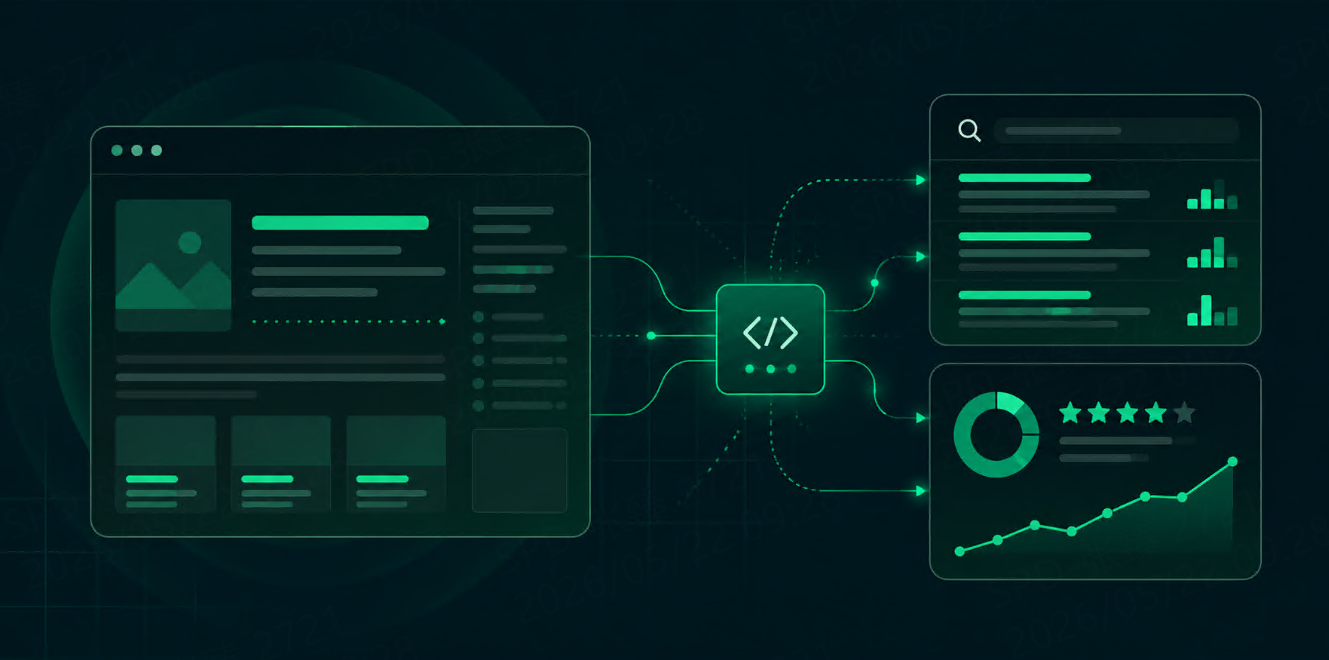
How Can AI Agents Access Real-Time Google Search Results?
Learn how AI agents can access real-time Google search results using web search tools, Google Search grounding, Google Programmable Search JSON API, or SERP APIs. Includes workflow design, Python tool example, RAG integration, and best practices.



AI agents are useful when they can reason, plan, and call tools. But without real-time search data, they are often trapped inside their training cutoff. That is fine for stable knowledge, but not for prices, news, rankings, product pages, local businesses, competitor pages, or fresh research.
If an AI agent needs to answer questions like these, it needs live search access:
|
Agent task |
Why real-time search matters |
|
“Find the latest pricing pages for SERP API providers.” |
Pricing changes |
|
“Check which competitors rank for this keyword today.” |
Rankings change |
|
“Summarize recent news about this company.” |
News changes |
|
“Find local businesses near Austin with high review counts.” |
Maps data changes |
|
“Collect sources for a RAG answer.” |
Fresh source URLs matter |
|
“Monitor brand mentions across search results.” |
Visibility changes over time |
The key is not just giving the agent “internet access.” The key is giving it structured, controlled, and auditable search data.
An AI agent should not blindly browse the web like a moth in a library. It should call a search tool, receive structured results, inspect sources, and then decide what to do next.
The 4 main ways AI agents can access real-time Google search results
There are four practical approaches.
|
Method |
Best for |
Main tradeoff |
|
Built-in web search tools |
Agent answers with citations |
Less control over raw Google SERP data |
|
Google Search grounding |
Gemini-based grounded responses |
More answer-oriented than SERP-data-oriented |
|
Google Programmable Search JSON API |
App-level programmable search |
Not the same as full Google SERP scraping |
|
SERP API / Search Results API |
Structured Google results for agents |
Requires external API integration |
Google’s Gemini documentation says Grounding with Google Search connects Gemini models to real-time web content, while OpenAI’s web search tool lets models access up-to-date information from the internet and return sourced answers. Google’s Custom Search JSON API can return web or image search results in JSON format, though its documentation also notes that existing Custom Search JSON API customers have until January 1, 2027 to transition to an alternative solution.
For most AI agent workflows that need Google-like search result data, a SERP API is usually the cleanest option.
Option 1: Use a built-in web search tool
Some AI platforms provide a web search tool directly inside the agent runtime.
This is useful when the agent’s job is to answer user questions with fresh sources.
Example:
“What changed in Google’s AI search features this week?”
The model can call a search tool, read current pages, and cite sources in the answer.
When built-in web search makes sense
|
Use case |
Why it works |
|
Q&A agents |
The agent can answer with recent sources |
|
Research assistants |
Good for summarizing current pages |
|
News monitoring |
Useful for fresh developments |
|
Fact checking |
Helps verify claims |
|
Customer support |
Can retrieve current docs or policy pages |
Where it may fall short
Built-in web search is often optimized for answer generation, not raw search data extraction.
It may not give you full control over:
|
Need |
Why this matters |
|
Exact Google ranking positions |
SEO workflows need stable rank data |
|
Full SERP structure |
Ads, maps, shopping, and snippets matter |
|
Batch keyword tracking |
Agents may need thousands of queries |
|
Location and device control |
Local SEO depends on precise context |
|
Historical snapshots |
Monitoring requires stored results |
|
JSON schema consistency |
Product workflows need predictable fields |
So built-in search is good when the agent needs an answer. It is less ideal when the agent needs a search dataset.
Option 2: Use Google Search grounding
If you are building with Gemini, Google Search grounding is another option. It connects model responses to real-time web content and can return grounding sources.
This is useful when you want the model to produce a grounded answer instead of manually building a search retrieval layer.
When Google Search grounding makes sense
|
Use case |
Why it fits |
|
Gemini-based agents |
Native ecosystem fit |
|
Fresh factual answers |
Uses real-time web content |
|
Source-backed responses |
Useful for trust and verification |
|
Lightweight research workflows |
Faster than building a full search pipeline |
Where it may fall short
Grounding is not the same as a SERP API.
If your agent needs to know:
|
Question |
Better fit |
|
Which URL ranks #1 for a keyword? |
SERP API |
|
What are the top 100 organic results? |
|
|
Which competitor entered the top 10 today? |
SERP monitoring workflow |
|
What snippets appeared in Google Search? |
SERP API |
|
How did results change by city or device? |
Geo-targeted SERP API |
Grounding helps the model answer. SERP data helps the agent measure and act.
That difference is small in wording but huge in product design.
Option 3: Use Google Programmable Search JSON API
Google Programmable Search JSON API can return search results in JSON. It can be useful for websites and applications that need programmable search.
However, it is not the same as collecting full Google SERP pages. It is better understood as programmable search over a configured search engine experience, not a full replacement for rank tracking, SERP feature extraction, Google Maps monitoring, or competitor SERP analysis.
When it makes sense
|
Use case |
Why it works |
|
Site search |
Search within selected sites |
|
App search feature |
Add controlled search to a product |
|
Lightweight JSON search |
Get basic web or image results |
|
Small internal tools |
Useful for simple search needs |
Where it may fall short
|
Need |
Why it may not fit |
|
Full Google SERP monitoring |
Limited SERP feature visibility |
|
Rank tracking |
Not built as an SEO rank tracker |
|
Google Maps / local data |
Needs a more specific data source |
|
Shopping or rich results |
May not expose the fields you need |
|
AI agent source collection at scale |
Check limits and long-term product direction |
If your agent only needs basic search results, it may work. If your agent needs SERP intelligence, it probably needs a SERP API.
Option 4: Use a SERP API as the agent’s search tool
For many AI agents, the cleanest approach is to connect a SERP API as an external tool.
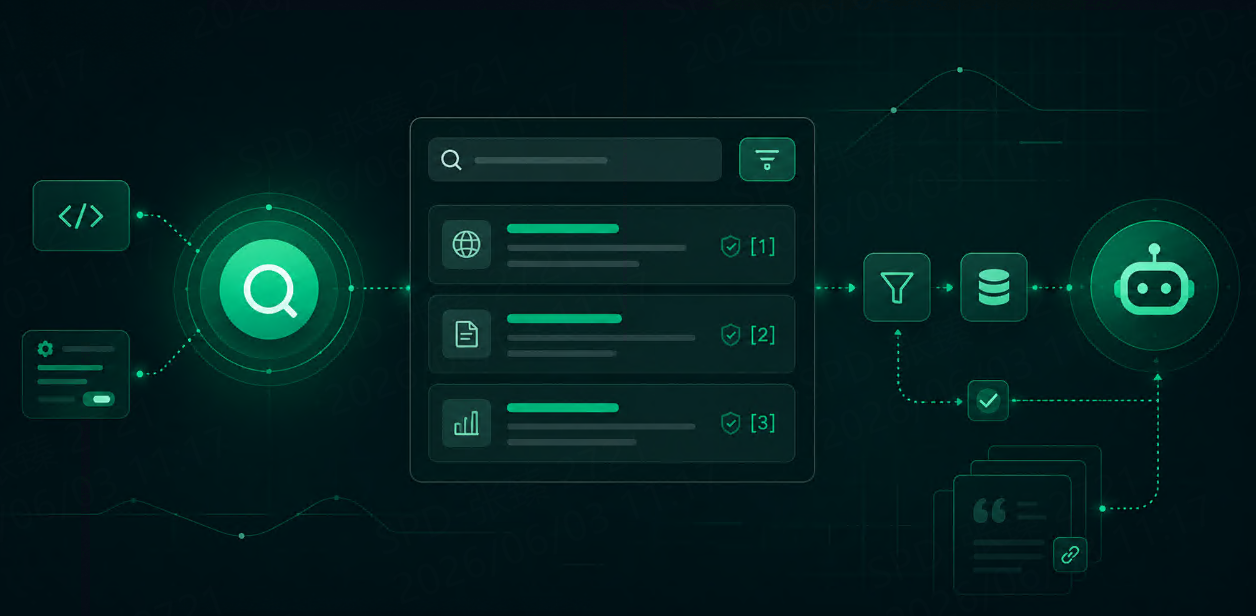
The agent sends a query. The API returns structured search results. The agent reads the JSON, selects useful sources, and continues the task.
This is the pattern:
User request
   ↓
AI agent plans search query
   ↓
Agent calls SERP API
   ↓
API returns Google results in JSON
   ↓
Agent extracts titles, URLs, snippets, positions
   ↓
Agent reads selected sources or sends results to a RAG pipeline
   ↓
Agent produces answer, report, alert, or action
What data should the SERP API return?
For agent workflows, start with these fields:
|
Field |
Why the agent needs it |
|
query |
Keeps search intent clear |
|
engine |
Google, Bing, Yandex, DuckDuckGo |
|
country / location |
Makes results context-aware |
|
language |
Helps multilingual tasks |
|
device |
Mobile and desktop can differ |
|
title |
Helps source selection |
|
URL |
Source or destination page |
|
snippet |
Quick relevance check |
|
position |
Ranking and visibility signal |
|
domain |
Competitor or source grouping |
|
timestamp |
Enables monitoring over time |
For advanced workflows, add:
|
Field |
Use case |
|
ads |
Commercial pressure |
|
local results |
Local SEO and place discovery |
|
related questions |
Content planning |
|
shopping results |
Ecommerce monitoring |
|
news results |
Freshness tracking |
|
sitelinks |
Brand visibility |
|
AI answer fields |
AI search visibility |
|
HTML output |
Debugging and inspection |
An AI agent with only URLs is half-blind. An agent with titles, snippets, positions, and context can make better decisions.
Example: Python tool for an AI agent
Here is a simple Python function that an AI agent can call as a tool.
The endpoint and parameters should be adjusted to your SERP API provider.
import os
import requests
from typing import Any, Dict, List
from urllib.parse import urlparse


SERP_API_KEY = os.getenv("SERP_API_KEY")
SERP_API_URL = "https://YOUR_SERP_API_ENDPOINT"


def search_google(query: str, location: str = "United States", language: str = "en") -> List[Dict[str, Any]]:
    """
    Search Google and return simplified organic results for an AI agent.
    Replace SERP_API_URL and parameter names with your provider's API format.
    """
    if not SERP_API_KEY:
        raise RuntimeError("Missing SERP_API_KEY environment variable.")

    params = {
        "api_key": SERP_API_KEY,
        "engine": "google",
        "q": query,
        "location": location,
        "language": language,
        "device": "desktop",
        "format": "json"
    }

    response = requests.get(SERP_API_URL, params=params, timeout=30)
    response.raise_for_status()
    data = response.json()

    organic_results = data.get("organic_results", [])
    simplified_results = []

    for index, item in enumerate(organic_results, start=1):
        url = item.get("url") or item.get("link") or ""
        domain = urlparse(url).netloc.replace("www.", "")

        simplified_results.append({
            "position": item.get("position", index),
            "title": item.get("title", ""),
            "url": url,
            "domain": domain,
            "snippet": item.get("snippet", "")
        })

    return simplified_results
The agent does not need the entire raw response for every task. It often needs a clean, smaller version first.
Example agent instruction
You can expose the function above as a tool and give the agent a rule like this:
When the user asks about current rankings, competitors, recent pages, fresh sources, or market visibility, call search_google first.

Use the query, title, URL, snippet, position, and domain fields to choose relevant sources.

Do not rely only on the snippet for final claims. If the task requires factual accuracy, fetch and read the source page before answering.
This keeps the agent from acting like a headline-reading parrot with a tiny hat.
How agents should use search results
A good search-connected agent should follow a clear process.
|
Step |
What the agent does |
|
1 |
Understand the user’s intent |
|
2 |
Generate one or more search queries |
|
3 |
Call the search API |
|
4 |
Inspect titles, snippets, domains, and positions |
|
5 |
Select reliable sources |
|
6 |
Fetch full pages when needed |
|
7 |
Extract facts or data |
|
8 |
Produce an answer, report, or action |
|
9 |
Cite or store sources |
|
10 |
Save snapshots for monitoring workflows |
The search API is not the whole brain. It is the agent’s periscope.
Real-time search vs RAG
A common mistake is confusing real-time search with RAG.
They work well together, but they are not the same.
|
Approach |
Best for |
|
Real-time search |
Fresh discovery from the web |
|
RAG |
Answering from a controlled knowledge base |
|
Search + RAG |
Finding fresh sources, storing them, then answering from indexed content |
For example:
|
Task |
Best approach |
|
“What are the top pages ranking today?” |
Real-time SERP API |
|
“Answer from our internal documentation.” |
RAG |
|
“Find new articles, store them, summarize weekly.” |
Search + RAG |
|
“Monitor competitor landing pages.” |
Search + scheduled snapshots |
|
“Build an AI research assistant.” |
Search + RAG + source verification |
A strong agent does not pick one forever. It uses the right retrieval tool for the job.
Where Talordata fits
Talordata can fit into this workflow as a structured search results layer for agents.
If your agent needs Google results in JSON, it can call Talordata to collect organic results, titles, URLs, snippets, positions, and other SERP data. If your workflow later needs Bing, Yandex, or DuckDuckGo, the same search data layer can support multi-engine comparison. Test TalorData SERP API for free now
This is useful for:
|
Agent workflow |
How search results help |
|
SEO agent |
Check rankings and SERP changes |
|
Competitor monitor |
Track who appears for target queries |
|
RAG source collector |
Find fresh pages to index |
|
Market research agent |
Compare search visibility across topics |
|
Local SEO agent |
Collect location-aware search results |
|
Content planning agent |
Find ranking pages and related questions |
The important part is not that the agent can “browse.” The important part is that it receives structured data it can reason over.
Best practices
1. Give the agent a search budget
Do not let the agent search forever.
Set limits:
|
Limit |
Example |
|
Max queries per task |
3 to 5 |
|
Max results per query |
Top 10 or top 20 |
|
Max source pages to read |
3 to 8 |
|
Timeout |
30 seconds |
|
Retry count |
2 |
This prevents tool-call confetti.
2. Store search context
Always save:
|
Context |
Why |
|
query |
Explains intent |
|
engine |
Search source |
|
location |
Localizes results |
|
language |
Explains content |
|
device |
Affects SERP layout |
|
timestamp |
Enables comparison |
Without context, search results become loose feathers in a server room.
3. Separate search from source reading
A search result snippet is not always enough.
Use search to discover sources. Use page fetching to verify details.
4. Use structured outputs
Ask the agent to produce structured answers when possible:
{
  "answer": "...",
  "sources_used": ["https://example.com/page"],
  "search_queries": ["..."],
  "confidence": "medium",
  "follow_up_needed": false
}
Structured output makes agent behavior easier to debug.
5. Cache results when appropriate
For repeated tasks, cache search results for a short time.
|
Task |
Cache idea |
|
News |
15 to 60 minutes |
|
Rank tracking |
Store every scheduled run |
|
Product research |
1 to 24 hours |
|
Static documentation search |
Longer cache |
|
Local SEO |
Depends on update frequency |
Caching reduces cost and makes behavior more stable.
Final thoughts
AI agents can access real-time Google search results in several ways: built-in web search tools, Google Search grounding, Google Programmable Search JSON API, or a SERP API.
For answer-focused agents, built-in search or grounding may be enough.
For SEO agents, competitor monitors, market research agents, RAG source collectors, and product workflows, a SERP API is usually the better fit because it returns structured search data: titles, URLs, snippets, positions, domains, location, device, and timestamp.
The best agent does not merely “go online.” It searches with intent, reads with caution, stores context, and acts on structured data.
That is how real-time search becomes useful instead of becoming a very expensive fog machine.
FAQ
Can AI agents access real-time Google search results?
Yes. They can use built-in web search tools, Google Search grounding, Google Programmable Search JSON API, or a third-party SERP API that returns Google results in JSON.
What is the best way for an AI agent to get Google search results in JSON?
For structured search data, a SERP API is usually the cleanest approach. It can return fields such as title, URL, snippet, position, domain, location, and timestamp.
Should an AI agent scrape Google directly?
Usually no. Direct scraping is brittle and can create maintenance, anti-bot, localization, and compliance problems. A Search Results API or SERP API is usually cleaner.
Do AI agents need real-time search if they already use RAG?
Often yes. RAG answers from a controlled knowledge base. Real-time search helps discover fresh sources that may not yet be in the knowledge base.