Serper vs Talordata: Which SERP API Is Better for Developers?
Compare Serper and Talordata for developers building SEO tools, AI agents, RAG workflows, and search monitoring systems. Review pricing, coverage, JSON output, use cases, and integration fit.
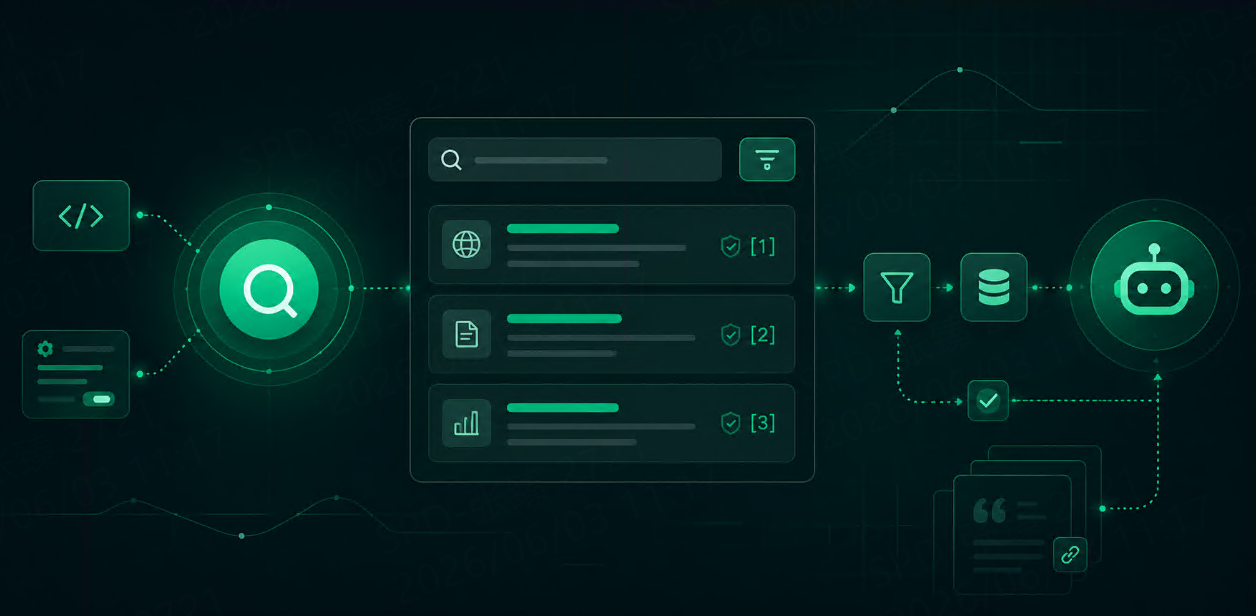



Serper and Talordata are both SERP APIs, but they fit slightly different developer workflows.
Serper is a lightweight Google Search API that is often attractive for AI prototypes, chatbots, and simple Google result retrieval. Its website highlights Google Search results in 1–2 seconds, 2,500 free queries, and support for Search, Images, News, Maps, Places, Videos, Shopping, Scholar, Patents, and Autocomplete.
Talordata is broader. Its SERP API page describes structured Google search results, organic results, ads, related questions, knowledge panels, JSON / HTML output, geo-targeted SERP data, and support for major search engines including Google, Bing, Yandex, and DuckDuckGo.
So the choice is not simply “which API is better?” A better question is:
Are you building a simple Google-only search feature, or a recurring SERP data workflow across engines, markets, and use cases?
Quick Comparison
|
Factor |
Serper |
Talordata |
|
Main focus |
Fast Google Search API |
Multi-engine SERP data workflow |
|
Good for |
AI prototypes, simple search apps, quick Google result access |
SEO monitoring, AI / RAG, competitor tracking, multi-engine data |
|
Output |
Structured Google result data |
JSON / HTML SERP responses |
|
Coverage |
Google Search and Google verticals |
Google, Bing, Yandex, DuckDuckGo |
|
Pricing model |
Credit top-up model |
Response packages |
|
Free testing |
2,500 free queries |
|
|
Developer fit |
Simple and fast to test |
Better for broader monitoring workflows |
When Serper Makes Sense
Serper is a strong choice when your product mainly needs fast Google results.
For example, you may be building:
-
an AI chatbot that needs web search grounding
-
a prototype that needs Google results quickly
-
a small internal search tool
-
a simple “search and summarize” workflow
-
a lightweight RAG source discovery layer
Serper’s pricing page uses a top-up credit model rather than monthly subscriptions. The Starter plan is listed at $50 for 50K credits, or $1.00 per 1K queries; larger plans go down to $0.30 per 1K credits at the Ultimate tier. Credits are listed as valid for 6 months, and credits are deducted when successful responses are returned.
That makes Serper easy to understand for developers who want to start quickly without designing a full SERP data pipeline.
When Talordata Makes Sense
Talordata becomes more relevant when SERP data is not just a one-time search call, but part of a repeatable data workflow.
For example, you may need to:
-
monitor keyword rankings every day
-
compare Google and Bing visibility
-
collect local search results across cities
-
track competitor pages and snippets
-
feed structured search results into AI agents
-
use both JSON and HTML outputs
-
run the same queries across countries, languages, and devices
Talordata’s pricing page lists 1,000 free API responses, then public packages such as 5,000 responses at $1/1K, 30,000 responses at $0.90/1K, 100,000 responses at $0.70/1K, and larger packages down to $0.25/1K at the 10M-response tier. It also lists real-time SERP data access, JSON / HTML responses, flexible query controls, country / city / language / device targeting, automatic retries, IP rotation, and request optimization.
This makes Talordata worth testing when your system needs structured SERP data that can move into dashboards, monitoring jobs, databases, or AI pipelines.
Developer Workflow Comparison
For a simple Google search feature, a request may look like this:
{
  "query": "best CRM software for startups",
  "location": "United States",
  "language": "en"
}
The app receives search results, extracts titles, links, and snippets, then passes selected URLs to an AI model.
For a monitoring workflow, the request needs more context:
{
  "engine": "google",
  "query": "best CRM software for startups",
  "location": "United States",
  "language": "en",
  "device": "desktop",
  "page": 1,
  "output": "json"
}
Then your system stores:
{
  "query": "best CRM software for startups",
  "location": "United States",
  "device": "desktop",
  "position": 1,
  "title": "Example CRM Guide",
  "link": "https://example.com/crm-guide",
  "domain": "example.com",
  "snippet": "Compare CRM tools for startup teams...",
  "timestamp": "2026-06-12T00:00:00Z"
}
This difference matters. Developers building AI prototypes usually care about simple source discovery. Developers building SEO tools or monitoring systems need stable metadata, repeatable parameters, localization, timestamps, and schema consistency.
Pricing: Query Cost vs Workflow Cost
Serper can be very attractive for Google-only workloads, especially because the entry plan is simple and the free query allowance is generous. Its public pricing starts at $1.00 per 1K credits and scales down with larger credit purchases.
Talordata starts at $1.00 per 1K responses on the 5,000-response plan and scales down to $0.25 per 1K responses at high volume. It also includes multi-engine access and query controls in every public plan.
But developers should not compare only the lowest number on a pricing page.
A better formula is:
real cost = total spend ÷ usable SERP results
A result is only usable if it includes the fields your workflow needs: query, location, device, position, title, URL, snippet, domain, result type, and timestamp.
Which One Should Developers Choose?
Choose Serper if your product mainly needs fast Google Search results, your use case is simple, and your team wants a lightweight API for AI prototypes or search features.
Choose Talordata if your workflow needs broader SERP data, multiple search engines, localized monitoring, JSON / HTML output, SEO tracking, competitor visibility, or AI / RAG pipelines that rely on repeatable structured data.
For many developers, the practical answer is simple: test both with the same real queries.
Run 20 queries across your target locations. Compare:
-
field completeness
-
response consistency
-
localization accuracy
-
missing snippets or URLs
-
cost per usable result
-
schema fit for your database or agent
The better SERP API is the one that gives your system cleaner usable data with less parsing, retrying, and manual cleanup.
FAQ
Is Serper better than Talordata?
Serper can be better for simple Google-only use cases, especially AI prototypes and lightweight search features. Talordata can be better when developers need multi-engine coverage, geo-targeted SERP data, JSON / HTML output, and recurring monitoring workflows.
Is Talordata a Serper alternative?
Yes. Talordata can be considered a Serper alternative when the workflow needs more than quick Google Search results, such as SEO monitoring, competitor tracking, Bing / Yandex / DuckDuckGo coverage, or structured SERP data for AI and RAG systems.
Which SERP API is cheaper?
Pricing depends on volume and usage model. Serper lists $1.00 per 1K credits on its Starter plan and lower rates at larger top-up tiers. Talordata lists $1.00 per 1K responses on its 5,000-response plan and lower rates down to $0.25 per 1K responses at high volume. Always compare cost per usable result, not only price per 1K requests.
Which API is better for AI agents?
For a simple AI agent that only needs Google Search results, Serper may be enough. For AI agents that need multi-engine source discovery, localized search context, structured metadata, and recurring monitoring, Talordata is worth testing.